Category: Everyday

  • Bipolar in the social context

    Bipolar in the social context

    I don’t know what kind of bipolar you have, but you seem fine to me. 

    I don’t think of you as bipolar, just less neurotypical. 

    Everyone feels like that sometimes. 

    What happened to your arm?

    That’s normal, though. 

    Where were you last week?

    Everyone struggles with things like that. 

    Why do you see the need to label yourself?

    Why do you talk about bipolar so much, it’s like you want it to be your identity.

    It’s ”in” to be bipolar now, isn’t it?

    What happened to your face?

    You don’t look mentally ill.

    Why are you stressed?

    Depression is a myth, there’s no proof of chemical imbalances in the brain.

    Why are you depressed?

    Just remember, there are those who have it a lot worse. 

    Have you tried positive thinking?

    What are you anxious about?

    Everyone gets worried sometimes. 

    Have you tried essential oils?

    Everyone feels down sometimes. 

    You laugh all the time though?

    You look fine. 

    Where have you been?

    You look normal. 

    Things that have been said to me.

    Living with a mental illness, you’re constantly torn between hiding your symptoms and justifying your struggles; If you’re not coping, you’re made to feel bad for not coping. But if you are coping, your diagnosis and the very coping strategies themselves are questioned. 

    The amount of energy and effort it takes to find the socially acceptable balance, to stay well enough to be a functioning member of society, but vulnerable enough that people don’t forget to not expect too much from you at certain times or pile too much work on you, uses up half of my batteries at any given time.

    I get less social and let fewer people close to me the older I get, because this is something I always have to take into consideration.

    It’s not the hanging out that’s exhausting. It’s the pretending to be fine and trying to regulate my emotions. And it’s the amount of anxiety and self-torment I have to work through after each time I’ve failed. 

    I am both of the people in that photo. I work really hard to avoid the one on the left, but it’s still part of me. 

  • WHAT FRESH HELL IS THIS?

    WHAT FRESH HELL IS THIS?

    Don’t worry, that’s actually a misleading title. In fact, things are pretty good and have been good for quite some time. Well, I say good. My bank balance is currently on minus and my relationship has seen sunnier days, as has the actual world outside our windows, but in terms of the landscape and weather of my mind, I am pleasantly surprised to say, I am actually stable.

    “But, Ida. It’s the end of October”, said no-one, but I’m going to pretend you did and reply accordingly.

    Yes, believe me, I know. It’s in the middle of autumn and I should be nose deep in the liquid fog that is depression right about now. But, for whatever reason (possibly my brain having finally re-wired itself back to normal after our vacation down the Rabbit Hole of “giving anti-psychotics a go” for a couple of years and then going off them again a bit too suddenly, or generally being in a better place in my life with actual prospects that can’t all be dismissed as pipe dreams), I’m not.

    I’m slightly low, mostly in energy and stress sensitivity. My actual mood flitters between happy to be experiencing a non-depressed autumn for the first time in years, anxious that that will change at any moment and physically tired as my body has gone into battery saving mode. I’m extremely unfit and not even a little bit pregnant (long story…) and it’s becoming increasingly difficult to ignore the fact that my relationship is teetering on the edge of tepid closure, plus I’m in London so it’s grey and cold rather than colourful outside.

    But…

    • My mind: stable.
    • Crying: controllable, and barely ever happening at all.
    • Suicidal thoughts: none.
    • Self harm urges: none.
    • Future: constantly on my mind as a very real thing.
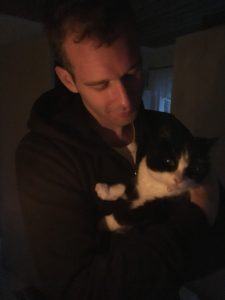
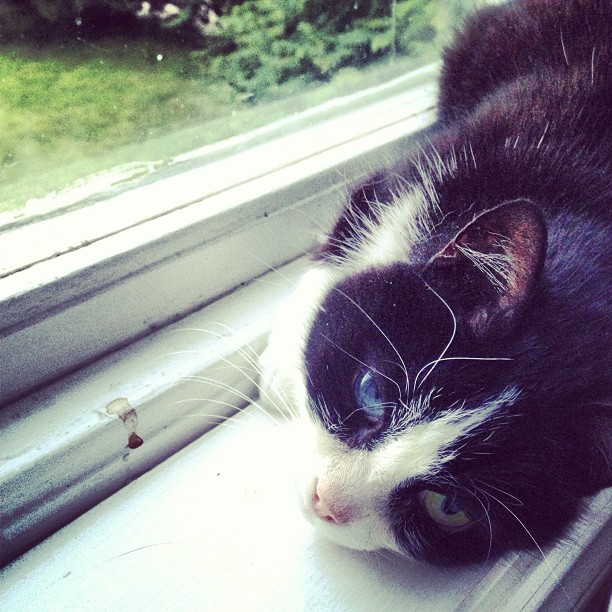
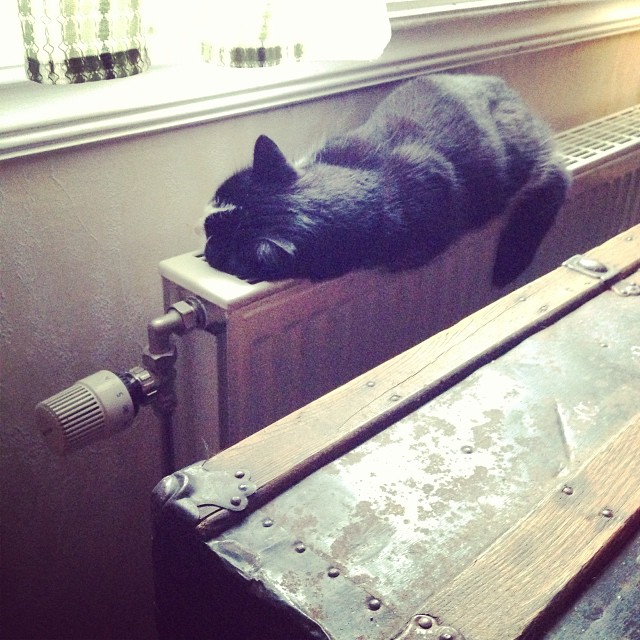
    • Cat: existing in my life.
    • Projects: in actual pipelines.

    I wish there was an answer to how I got here that could easily be reduced to a single paragraph, so I could go: this is what I did to get better, why don’t you try doing it too! you know, if only all of my ups and downs and suffering and coping strategy trial and errors could somehow be condensed into a quick fix for me to pass on, so that you could try it, and it could be helpful, and maybe this blog (which just auto renewed and put my bank balance in overdraft) would serve some kind of purpose.

    But, you and I both know that’s not how it works. Even if I am in fact better and stay stable for the rest of autumn and winter, or indefinitely, if I actually did “fix” myself, even if I only fixed myself enough to not be riddled with crippling anxiety and nearly uncontrollable suicidal impulses for weeks and months on end… there was nothing quick about it.

    It’s been a long, arduous journey of: mood stabilisers (the kind that comes in a pill form and the kind that comes in the shape of binge watching youtube videos of your latest obsession or submerging yourself in some kind of creative process), self-medication with alcohol and socialisation, self-harm in the form of afore-mentioned alcohol and socialisation (read: sex) and other inventive ways that lead to cuts and bruises and the fit of your wardrobe fluctuating, healthy coping strategies involving certain types of diet and exercise regimes involving cross fit, yoga, weight lifting, long distance running, swimming and martial arts, healing, therapy, bottling everything up, letting it all out, acting classes, ending the unhealthy relationships and nurturing the healthy ones, going out of your comfort zone and pushing yourself, be told you can’t do a thing and do the thing anyway, anti-psychotics, teaching yourself cognitive behavioural therapeutic techniques and eventually getting rid of several phobias because you’ll be damned if you’re going to let yourself be limited by fear, moving houses, moving cities, moving countries, having a breakdown, eating through your savings, running out of medication, going crazy, getting through a week of severe anti-psychotics withdrawal symptoms including debilitating chest pain, getting on a bike and somehow riding for an hour to get to a supply teaching job despite afore-mentioned chest pain, slowly but steadily working enough to afford meds so that mood goes back down to depressed but body functions properly again, weaning off meds, really intense hypomania with anxiety and suicidal ideation for two years, drinking more again, starting therapy and sticking with it, infatuation, more projects, less sleep, worsening anxiety, hypomania finally replaced by severe depression but still with intense anxiety and suicidal thoughts (including two almost-attempts and one half attempt) for about a year and a half going on two, support of partner, support of family and friends, more therapy, changed lifestyle, lots of meltdowns, self-harming, painting, recovery college courses, online mental health community, working (writing, filming, hustling), bloody breathing exercises and more yoga.

    And here I am.

    If there is one thing I’ve learned throughout all of that, it’s that whether you’re riding a polar bear into battle, cuddling up with a huddle of penguins or just cruising along the equator, shifts and changes always happen slowly, then suddenly.

  • Creating ripples

    Creating ripples

    It never rains but it pours!

    Emerging from lockdown, I went from having very little to do but potter around working on my own projects (while my bank account slowly emptied) to suddenly becoming extremely busy for all of August, and it doesn’t seem to be letting up any time soon.

    After three intense (and hot) days of filming on location in central London, we have shot the pilot episode of the web series ‘Decipher’ which is now in post-production and shaping up to be a really nice episode; it’s a little more towards the traditional narrative than the rest of the show will probably be, but it will still set the tone quite well and it’s got some awesome performances as well as peripheral gamification features (again, fairly simple in the pilot, but that will also become gradually more complex in future episodes!)

    As part of the Filmmaker In Residence programme of House of Beautiful Business, I am also planning and producing some really cool content for The Great Wave event in October. Without giving too much away, I can just say that I am currently making a Warholesque (possibly controversial) mini documentary in collaboration with AI researcher Twain Li, collaborating on an experimental short film with amazing designer & animator Jess Palmer (also part of the Filmmaker in Residence programme) and composers/musicians Rick Parker & Li Daiguo and collaborating with graffiti artist Tizer on an experimental film which is basically a visual rant, amongst other things!

    In-between editing the web series pilot and working on all of the above, I have also managed to find time to play a small part in an independent feature film, write and publish an opinion piece & an album review for Vocal Girls, write up the outline for a new feature film idea (inspired by my conversations with AI researcher Twain Li) and finally, in what little spare time I’ve had, I’ve been hiking in the Peak District & started a pottery course!

  • Feeling Good (or When I Realised That The Opposite of Self-Care Is Self-Harm)

    Feeling Good (or When I Realised That The Opposite of Self-Care Is Self-Harm)

    Every fibre of my being tells me I can’t ask for anything that will make me feel good, because I don’t deserve to.

    I have, what I call, a ‘Mean Voice’ in my head; a dry, cold voice that speaks to me every minute of every day.

    I can be excited or inspired or angry or sad, or be having an awesome day, it doesn’t matter. Mean Voice doesn’t make allowances. She has one job to do: to point out all my failures (past, present and potential) and flaws (real or imaginary) to me, and one hell of a work ethic. She notices the weird looks and fake smiles of people around me, or even just the micro-expressions on their faces, all their subtle tells, and is vigilant in making me aware of them before offering her theory about what they mean — and it’s always the same theory — they dislike you, maybe they even hate you.

    “And why wouldn’t they”, Mean Voice will add conversationally, before treating me to a rapid mental montage of ‘Every Bad Thing Ida Ever Did And All The Times She Failed At A Thing’, projected onto the screen of my mind. “You’re just awful, aren’t you?”

    That is the perpetual moral of her narrative, the conclusion she always arrives at.

    And if that wasn’t bad enough, my body conspires with her and I get a craving for unflavoured instant noodles and eat nothing else for days at a time; my skin crawls and itches and won’t stop even when I draw blood; my throat seizes up and my stomach plummets when I receive a compliment, smile or gentle touch; I overthink punctuation in text messages and create conflicts where there were none, then cry my eyes out because I don’t like conflict; I refuse to receive oral from my partner, then lie awake in the dark and fantasise about it, feeling a longing so strong it’s physically painful.

    Here’s the silverlining: I know what this is now. I know that just because I’ve thrown away my razorblades and stopped punching walls, I didn’t automatically stop self-harming.

    That’s all it is. The toxic relationships, the sleepless nights, the skipped meals, the workout mania, the self-sabotage and depriving myself of everything good, or chasing it away again if it still manages to find me, those are all just invisible cuts and bruises.

    And now that I know — I can work on it…

    A post in my old Mental Health blog, summer 2018

    Early on in my relationship, I was struggling to eat. I’ve never had an eating disorder, but when I’m anxious or nervous or, as it turns out, infatuated, I can’t stomach very much. Similarly, if I’m hypomanic, I don’t feel the need to eat, or sleep, or I simply just forget to. Which is why, in the first six months of 2018, due to being hypomanic and in love for the first time in my life, I lost another twelve kilos on top of the thirteen I’d lost from weening off my medication.

    Over the past year I have regained about five of those kilos and my GP no longer considers me underweight; I am somewhat happy with my body, although it causes me a lot of pain and I could do with more regular exercise and core strength, I do by no means consider myself to have body issues, and I am not at risk for developing an actual eating disorder. 

    However… Here I am, force feeding myself toast and batting angry tears from my cheeks, and I can’t help but ask myself What the hell happened? 

    The butterflies of infatuation moved out ages ago and I am definitely not hypomanic right now. If anything, I am on a four, teeting on the edge of a three. Yet, for several days now, I keep “forgetting” to eat — and even when I look up from my writing to realise Oh, shit, it’s two o’clock, where did the time go? and I never had breakfast, I don’t press Save on my Word document and get up to make myself a meal, in fact I deliberately don’t.

    Every day for the better part of a week, I’ve skipped breakfast and lunch, and by the time my partner and I have dinner my stomach is aching with hunger… But even then it’s a struggle for me to finish what’s on my plate; the food doesn’t taste of anything anymore and after only a couple of bites my stomach starts protesting. I eat anyway, even when I start to feel slightly sick. I even go for seconds, and then I go to bed with a stomach ache… So what’s happening here?

    Well, I figured it out. And I am not happy.

    Let me take you on a joyous journey of the inner workings of Ida Thomasdotter:

    I’ve become so good repressing my self-harm urges by now that, beyond a dull but persistent pressure that squeezes me from all sides, including from the inside out, I don’t even notice them sneak up on me anymore. But they do. And even if my conscious mind is none the wiser, my body still reacts accordingly: my chest caves in, my hands tingle, my stomach knots itself and I pend between crying uncontrollably and fighting not to, until my throat closes up and all I can think is everything’s wrong, even though rationally I know that nothing really is, and the fact that I know that, but still feel the wrongness with every fibre of myself, just enforces the feeling and intensifies all of the aforementioned symptoms.

    And this is where my subconscious self-sabateur’s real genius comes in… At this point in the process, I arrive at the conclusion that the thing that is wrong is me; I am wrong for being like this and feeling like this, despite all available evidence telling me that things are fine, which means I am irreparably damaged and doomed to always be and feel like this, which means I am always going to be impossible to be around for any length of time, which means that I am a burden on anyone and everyone in my life, which means I should have no-one in my life, because that would be selfish and evil of me — and the fact that I do have people in my life who have to put up with the misery that is my existence can only mean that I am selfish and evil.

    Hence, I don’t deserve good things, including food even though my stomach is aching from hunger.

    But that’s not the genius part. Here it comes: even after I’ve caught onto myself and realised what I’m doing, given myself a stern talking to and let myself know that this bullshit will no longer be tolerated, the mental and emotional joyride, however fabricated, has left me with all the lovely symptoms of anxiety that one might expect nonetheless, including a stomach in knots incapable of process food.

    Self-Saboteur: Check…

    Me: *GROWL*

    So here are some quick fix tips, if you have this problem:

    1. Water. Cold water, drunk in little sips. Not only does it “warm up” your stomach, but focusing on the feeling of it in your mouth, throat and stomach, is a good mindful distraction that tricks your brain to focus on your body rather than the infinity that is your anxious mind.
    2. Comfort food. Food that is “easy” to eat, but that you also enjoy the taste of. Taste is important, trust me. Even if you can’t actually taste it at this moment in time, it needs to be a food that you would enjoy the taste of under normal circumstances. Even if you have an inexplicable “craving” for unflavoured instant noodles, don’t fall for it. My Self-Saboteur does this to me all the time, sends a signal to my brain and creates a craving for something that I actually won’t enjoy so that, as I eat/drink/do it, I subconsciously associate the activity as some form of punishment, which reinforces the whole “I don’t deserve good things” idea.
    3. Eat a rainbow. Make yourself a meal with at least three different colours — colours, not shades — which will have a psychological as well as physiological impact. Same reasoning as with the comfort food, with the added benefit of a healthy nutritional boost.

    Self-Saboteur: Wait, wha–

    Me: Check fucking mate!

  • COMING OUT (Disclosing your mental illness diagnosis – Part One)

    COMING OUT (Disclosing your mental illness diagnosis – Part One)

    Before I met my partner, whenever I went on a date I used to blurt out that I’m bipolar as a throw away comment or self-deprecating joke, usually mid-monologue, within minutes of meeting the person. I always told myself that I did this because it was the best way to kill the stigma around the disorder — you know, full disclosure, cool and casual.

    When I tentatively began dating again at the age of twenty-nine, a friend and former flatmate of mine in Stockholm half-jokingly gave me some basic rules for a first date, a simple list of three topics that she told me were off limits on a first date, and they were: 

    1. Quantum physics
    2. Existentialism, and specifically death
    3. The fact that I’m bipolar

    I suppose the joke is that I always went into every first date with the serious intention of actually following these rules and always, without exception, unintentionally broke them. Every single one of them. 

    But then I met my partner and he was different, what I felt for him was different, and suddenly I changed my MO — not consciously — it wasn’t until I got home from my first date with him that I realised I’d never made a joke about being bipolar, in fact I hadn’t mentioned it at all. When I went on the second date with him, I had every intention of telling him and get it over with, but I actually found myself struggling to get the words out. So, again, I went home with what by this point felt like a big secret. 

    This made me realise that routinely revealing that I have bipolar disorder with an off-handed comment five minutes in to a first date, was less about reducing the stigma around it and more about subconsciously protecting myself from rejection and hurt. 

    When you’re bipolar, it’s very common to meet people, whether they’re new friends or romantic partners, whilst you’re up. Because this is when we’re at your most exciteable, inspired, productive and, most importantly, social. So this is the version of us that the other person gets to know and, sometimes, fall in love with. 

    Then our mood swings, and they have to get to know a whole new side of us — a  version of us that can seem like a whole other person sometimes — and figure out the relationship basics, such as communication and intimacy, all over again, which can be confusing to say the least. But remember, we also have to figure these things out, whilst dealing with our symptoms and the anxiety about how the symptoms are going to affect the relationship, at the same time. 

    This is why it helps to be self-aware and really know ourselves, our moods and our symptoms, because that way we’re better prepared for the storms when they come, which makes it easier for us to ride them out, but it also makes it easier to have the conversation with our friends and partners ahead of time and prepare them for what the storms can be like for us, so that they have a better idea of what to expect and how best to support us.

    Because if you’re going to have a close relationship, platonic or romantic, you’re going to be riding out the storms together whether you like it or not. 

    I met my partner at the end of February, just as I was heading into a hypomanic episode and the connection turned crush turned infatuation that I experienced throughout the first date, sped up that hypomania, so the person that my partner met and subsequently got to know as we continued dating, was the hypomanic version of me, a version that persisted because the year I met my partner I was more or less hypomanic for six months straight.  

    Then, as the summer started to come to an end, I knew I was likely to get low soon and, knowing my tendency to isolate myself and actively push people away during depressive episodes and not wanting this happen with this person in case that would ruin the relationship, I knew I had to warn him beforehand that this might happen. 

    There was a lot more I could have told him, other symptoms to look out for, but because the relationship was still in the early stages and I was worried I might scare him away, I only told him the bare minimum. In hindsight, I wish I would have been been brave enough to give him full disclosure, because I believe it would have been easier on both of us if he hadn’t been thrown head-first into a situation where he was discovering these things as they were happening and having to figure out how best to support me at the same time.

    When I finally managed to bring myself to tell my partner that I have bipolar disorder, we were three weeks into the relationship and by then, the stakes had sky-rocketed for me, for two reasons: having waited so long to bring the subject up automatically turned the quirky personlity trait of previous first dates into a an actual Big Deal (which in hindsight was a good thing, because having bipolar is a big deal and needs to be taken seriously, both by by the people in my life and myself) and also, by this point I’d developed feelings for the guy, so if the revelation that I’m bipolar were to scare him off, I would definitely have my heart broken. 

    At the time, I was kicking myself for having put myself in this vulnerable position and was wishing I could go back in time, back to that first date and blurt it out somewhere between hello and I just finished writing this screenplay. But as it turns out, because the revelation started with ’I want to tell you something’, the conversation that followed was decidedly serious, no matter how many self-deprecating jokes I tried to fling into it, and my partner listened and reacted accordingly — with calm and respect — and the first thing he asked me after I finished talking, was had I been nervous about telling him and, when I admitted that I had and still was, he thanked me for trusting him. 

    I’ve been thinking about that moment a lot. Although it hadn’t occurred to me before, when he said this I realised that he was right. I had trusted him in a way that I hadn’t trusted anyone I’d dated before — not with my bipolar, but with what my bipolar actually means — I’d trusted him with my vulnerability. And I believe that that became the foundation of the trust and intimacy that we came to build our relationship on. My partner’s understanding and respect was paramount to this, but what I realise now is that his understanding and respect was a reaction to the way I told him. 

    I have developed gallows humour as a coping strategy to help me cope with the darkness in my mind and, although I do believe that finding the humour in your darkness demystifies and disempowers it, if you get into the habit of constantly turning your pain into a joke, no-one will take it seriously, even when you need them to. 

  • Moods, relationships and novel manuscripts.

    Moods, relationships and novel manuscripts.

    My partner and I recently returned home after a mini getaway to the Lake District meant to recharge and inspire, and it did for the most part, but there were a few days of readjustment coming back home where the emotional batteries seemed drained more than anything. Or at least that’s what I thought was happening, possibly in combination with the arrival of November and the weather growing steadily greyer and bleaker by the minute. But even if I wasn’t exactly sure of the cause, I was experiencing severe anxiety symptoms and also feeling generally teary and hopeless on top of it. At first I simply put it down to depression — ’tis the season for it, after all — and instinctively I looked to my partner for gentle support and affection, but there was a disconnect happening between us. Even when we went through the motions of hugging or kissing, there was no actual emotion or connection behind it. I felt completely cut off from him, and it made my anxiety worse and worse. Especially when we were in the same room but clearly isolated from each other mentally and emotionally, leading to me feeling irrationally scared and extremely lonely. It took two and a half days of this before I realised what was going on, what was the actual cause of my symptoms. And by then it was almost too late.

    Yes, I was feeling slightly low about the bleak, grey weather and nothing to really look forward to for over a month. But I wasn’t that depressed, not really. Not when I stopped to really evaluate what I was feeling. The problem was anxiety, and the anxiety was about sensing depression as well as disconnect in my relationship. In other words, I was subconsciously channelling my partner’s depression and getting really anxious about it, before I was even able to process it consciously and before he started showing actual, physical signs of being depressed. Of course, by the time he did, and by the time I realised what was happening (and had been happening for quite a while, in the weeks leading up to the Lake District trip and during the trip itself, which would explain why I couldn’t fully relax and enjoy it, why the romance part of the romantic getaway never really felt real and why I’d been feeling disconnected from him), my fretting and weeping and meeping about the place had already done its damage and exacerbated my partner’s mood. I did manage to sort of nip it in the bud, because as soon as I had my epiphany, I promptly gave him (and myself) space.

    It didn’t help at first, if anything it seemed to make things worse. But by then most of my anxiety had subsided, because I knew what was going on, so I could keep giving my partner space whilst focusing on my own things and still be there for him when he needed. Mostly gentle support in the shape of symbolic cups of tea and the odd reassuring hug or kiss (without turning into a limpet, but silently accepting his limpeting) but also sternly nipping another near break-up in the bud when he fell back into his pessimistic ways of thinking and projecting his mood on the relationship. I’m getting quite good at dealing with Grumpy Tom’s little pre-prepared speeches now (“Practise makes perfect”, as they say.)

    I think we’re okay now. I feel a bit frustrated with myself for still not being able to process these things on a conscious level before it escalates. (I think this is where they say something like “Rome wasn’t built in a day!”)

    On the upside of all of this: the emotional rollercoaster, being between freelance projects this week and having been “forced to” focus on my own stuff for a few days whilst waiting out Tom’s mini hibernation, means that I have actually got some work done on the manuscript of my novel which has been dormant since I had most of the ideas and made the outline in the middle of the summer. I am taking advantage of the NaNoWriMo challenge to get a bulk of words out on paper (I’m great at ideas/writing-in-my-head and editing already written text, but really struggle to get that first draft out of my head) and figured it would also make an excellent stone to bash in the brains of the birds Get Through November In One Piece and Give Tom Enough Space To Survive His Own November Depression.

    Having said that, today is my fifth day in a row supposedly writing on the novel but so far I have repotted all of our plants, googled pregnancy symptoms, triple checked my emails and now, as you can see, I am writing… just not on the novel. Daily word count goal is still 1655 and my coffee needs reheating again… Better leave it, though. Last time I went to reheat my coffee, I spent an hour mucking about with compost and seeds and the coffee exploded in the microwave volcano-style…

  • Welcome to my TED talk.

    Welcome to my TED talk.

    I’ve been taking some Recovery College courses, one about understanding Bipolar Affective Disorder, which was I found very helpful, not because I learned anything new, but because it reminded me what a difference it makes to around people who share your experiences and/or brain wiring, who gets it (you) without you having to spend a lot of energy trying to explain, it whilst putting yourself in that vulnerable position where you risk feeling misunderstood or rejected when you fail to accurately do so. You don’t notice it consciously, the strain it puts on you and how exhausting it is. Not until you’re talking to people who automatically gets it, then you notice the difference — it’s like you’ve had an invisible weight on your chest, making it hard to breathe deeply, but you’re so used to getting by on the quick, shallow breaths that you don’t even think anything off it until the weight is suddenly lifted and you can suck in a deep breath for the first time in ages. It’s reassuring, and makes you feel less alone. And I realised that I’ve been feeling very lonely lately.

    Other courses I’ve been taking have been more focused on making positive life changes and recovering from mental illness episodes or breakdowns or whatever it may be and staying well after recovery. Until quite recently, I had very fixed beliefs both about myself and about what it means to be well. I believed I was weak and not resilient enough because I continuously fell back down into depression or caved under the pressure of anxiety, and no matter how much progress I might have made, I kept falling back down and having set-backs, which I believed to be proof of my own weakness. But then, slowly, I somehow shifted myself and could suddenly look at things from a slightly angle and I realised that I didn’t continuously fail by falling back into the dark pits of depression; I continuously climb out of deep, perilous pits, one after another, and it might get a little easier emotionally each time, because at least by now I know the way up, but that doesn’t make the actual climb any easier. I can’t pinpoint the exact moment when my perspective shifted, it was that gradual. But I know that if someone had come along and just told me: “You’re not weak falling down, you’re strong for getting back up!” at any point, I would simply have rolled my eyes and thought ‘that’s such a pretentious platitude!’ But it’s not about the words, which is why it’s no good hearing them from someone else, at least not when you’re not ready to hear them. It’s about putting the work in and allowing that slow, gradual shift in yourself to happen. That way the realisation sort of sprouts inside of you when you’re ready for it — and the roots are secured firmly enough — and it actually means something.

    I also used to believe that staying well means to be completely symptom free, and anything other than that is not good enough (and yes, you guessed it, I’m weak.) But it’s not about having no symptoms, it’s about having manageable symptoms — and healthy, non-destructive strategies in place for those times when the symptoms are less manageable.

    During my last session — the first of two full days in the course “Staying well and making plans” — I ended up having a really interesting conversation with another woman during the lunch break, about how helpful it can be to get your thoughts out and onto paper, not only because you’re using a different part of your brain to process the thoughts when you’re writing, but also because by creating that bit of distance between the thoughts and yourself, you may study them from an outside perspective. Also, since the mind in an infinite space, to try and make sense of those trains of thoughts or have those inner dialogues and try to reason with your inner self saboteur, they’ll just keep growing and growing, filling that endless space and you’ll get sucked into an endless, downward spiral, whereas if you get them out on paper, you’ll realise that — contained to that limited space — it’s not an endless spiral at all, it’s a closed loop.

  • Perspective

    Perspective

    I’ve been taking some Recovery College courses, one about understanding Bipolar Affective Disorder, which was I found very helpful, not because I learned anything new, but because it reminded me what a difference it makes to around people who share your experiences and/or brain wiring, who gets it (you) without you having to spend a lot of energy trying to explain, it whilst putting yourself in that vulnerable position where you risk feeling misunderstood or rejected when you fail to accurately do so. You don’t notice it consciously, the strain it puts on you and how exhausting it is. Not until you’re talking to people who automatically gets it, then you notice the difference — it’s like you’ve had an invisible weight on your chest, making it hard to breathe deeply, but you’re so used to getting by on the quick, shallow breaths that you don’t even think anything off it until the weight is suddenly lifted and you can suck in a deep breath for the first time in ages. It’s reassuring, and makes you feel less alone. And I realised that I’ve been feeling very lonely lately.

    Other courses I’ve been taking have been more focused on making positive life changes and recovering from mental illness episodes or breakdowns or whatever it may be and staying well after recovery. Until quite recently, I had very fixed beliefs both about myself and about what it means to be well.

    I believed I was weak and not resilient enough because I continuously fell back down into depression or caved under the pressure of anxiety, and no matter how much progress I might have made, I kept falling back down and having set-backs, which I believed to be proof of my own weakness. But then, slowly, I somehow shifted myself and could suddenly look at things from a slightly angle and I realised that I didn’t continuously fail by falling back into the dark pits of depression; I continuously climb out of deep, perilous pits, one after another, and it might get a little easier emotionally each time, because at least by now I know the way up, but that doesn’t make the actual climb any easier.

    I can’t pinpoint the exact moment when my perspective shifted, it was that gradual. But I know that if someone had come along and just told me: “You’re not weak falling down, you’re strong for getting back up!” at any point, I would simply have rolled my eyes and thought ‘that’s such a pretentious platitude!’

    But it’s not about the words, which is why it’s no good hearing them from someone else, at least not when you’re not ready to hear them. It’s about putting the work in and allowing that slow, gradual shift in yourself to happen. That way the realisation sort of sprouts inside of you when you’re ready for it — and the roots are secured firmly enough — and it actually means something.

    I also used to believe that staying well means to be completely symptom free, and anything other than that is not good enough (and yes, you guessed it, I’m weak.) But it’s not about having no symptoms, it’s about having manageable symptoms — and healthy, non-destructive strategies in place for those times when the symptoms are less manageable.

    During my last session — the first of two full days in the course “Staying well and making plans” — I ended up having a really interesting conversation with another woman during the lunch break, about how helpful it can be to get your thoughts out and onto paper, not only because you’re using a different part of your brain to process the thoughts when you’re writing, but also because by creating that bit of distance between the thoughts and yourself, you may study them from an outside perspective.

    Also, since the mind in an infinite space, to try and make sense of those trains of thoughts or have those inner dialogues and try to reason with your inner self saboteur, they’ll just keep growing and growing, filling that endless space and you’ll get sucked into an endless, downward spiral, whereas if you get them out on paper, you’ll realise that — contained to that limited space — it’s not an endless spiral at all, it’s a closed loop.

  • Progress

    Progress

    In my last post I was at a crossroads. In the end, I decided on the path of continued struggle, and it was — but not for long.

    Since then, things seem to have fallen quite neatly into place in a too-good-to-be-true turn of events. For the first time in what feels like forever, I find myself in a secure and happy place; I’m happy with my life, my relationship, my immediate future plans and even myself. I’m aware that autumn is still upon me and winter, with its potential pitfalls, is lurking just around the corner, but rather than being on edge and frightened because of that, I simply feel pensive, and possibly wary – but most of all I feel ready. I believe I am strong enough to carry the weight of that bird on my shoulder now. I believe my foundation is now strong enough to weather through any storm that comes my way. A month ago I believed the opposite, and I was terrified.

    Today, I was looking back on the last few weeks, feeling both perplexed and proud at the progress I’ve made in that short time, seemingly out of nowhere and with no effort at all, like Life was feeling particularly benevolent and just decided to give me break. But, of course, that’s not true. The progress didn’t just happen, and things didn’t just fall into place for me. Luck or fortune had as little to do with it as happenstance. The progress I’ve made in the last month happened because I took one conscious step forward, I did one practical thing that made one thing in my life a little easier and gave me the small energy boost as well as confidence to take one more step, which lead to one more, which lead to one more. Each step was fairly simple and painless, and it got easier and easier with each one I took. But, I’ll tell you what wasn’t simple, or easy, or painless. The hard and gruelling ground work that I was doing for a year, that in combination with the support of my partner, friends, family and therapist, made that first step even conceivable. I still have to remind myself that change doesn’t happen over night and progress is an on-going journey, and although it might feel like the set-backs get harder each time – if you take a moment to look back and really reflect on how far you’ve come and everything you’ve been through and overcome, you begin to realise that yes, the set-backs still feel like shit and they make you feel like you’re a failure and that all your hard work as been for nothing, while you’re still down. But it does get easier and easier to pick yourself up each time. And you do do so quicker and quicker. Because subconsciously you remember that you’ve done this before and you can do it again. You’ve got this. So you pick yourself up, you put yourself together as best as you can, you take a deep breath and you get on with it. And yes, like my partner told me recently, two steps forward and one step back is still progress. 

    But I had another realisation about my little steps today, as well.

    One of the things that’s contributed to the progress and my feeling happier, stronger and more stable, is that I’ve started doing hot yoga on a regular basis. Now, yoga itself helps ground and energise me, it stabilises or lifts my mood, and gives me gentle exercise that is good for me both physically and mentally, but I already knew that and have been doing yoga on and off for years already. I also knew that exercise is one of the most important components to my daily routine if I want to be stable and happy. Back in 2014, when I was living in Stockholm, I was struggling with depression and insomnia and a stressful day job situation similar to the one I was in at the end of last year. Then, in my desperation, after having tried everything but sleeping pills and the gym, I decided to give the gym a try and after a gruelling ten or so minutes huffing away on one of the treadmill, I could feel a switch flick in my brain and months worth of tension and anxiety started to fall off me and I could literally feel myself grow lighter. That night, I fell asleep for the first time in a fortnight and slept through the whole night. I woke up a new person and the first thing I did was go buy a gym membership and I started to go to the gym every single evening after work, and I started to get better. Over the next few weeks I devised my own little workout routine, mostly focused on cardio because that’s what allowed me to process the day and tire myself out, and get to sleep once I got home. But I also started to incorporate some strength exercises, enjoying the ability to see myself grow stronger by the number of weight I added to a certain machine or minutes spent doing a particular exercise.

    Then I moved to London and for various reasons I stopped exercising, and when my depression got worse again, and then even worse still, in fact worse than it’s probably ever been, I knew that exercise was one thing that I could do that would help. Just one simple step that I could take that I knew from experience would make me feel better, make me stronger, happier and more stable. I kept telling my therapist and my partner and my friends: “I know what I need. I know what works for me. I just need to start running. I’m just going to get a gym membership…”

    And I did get a gym membership. But it didn’t have the instantaneous effect I remembered and all I could focus on was how unfit and weak I’d become since I was working out regularly in Stockholm. I went swimming with my partner a couple of times, on his suggestion, and at first I felt like this might be a good thing – except, again, “I’m so unfit now. I used to be able to swim several kilometres and now I can barely do one. And, actually, I don’t feel like going swimming anymore… Maybe later when I feel better, stronger, less depressed – I know what I need, I need to get into my gym routine again. That worked before in Stockholm, I just need to get back into that, and things will be fine!”

    So, my partner, being the practically supportive fellow that he is (and that I love him for, dearly) suggested I come to his gym with him, because he could get me in for free. I didn’t want to. When I was trying to explain to him what the problem was, I was trying to make sense of it myself, and all I could think of was that I didn’t want him to see how unfit I am. So he got me my own membership – a family deal – so that I could go to the gym whenever I wanted, whether he was with me or not. And did I go? No. More and more, I started feeling an overpowering reluctance towards everything gym related. I couldn’t make sense of it. The gym used to be my safe space, my physical and mental health boosting place. And now I couldn’t think of a place I wanted to be in less.

    As the weather got warmer and we moved to a place nearer the woods, my partner suggested I take up running, something else I’d mentioned I used to do when I was younger that had been helpful. He even bought me new trainers. And I have been for runs in the woods. Just not consistently. I keep coming up with excuses and even when I have gone semi-regularly and started to see a tiny bit of progress in how long I could run for before my lungs started to feel like they might explode, I didn’t feel proud of myself, I didn’t feel any stronger or more hopeful. Same with yoga and pilates classes at the gym, and the core strength exercise routine my partner devised for me, tailored to my needs and with my various aches and pains in mind. I did that routine twice.

    Then cut to a few weeks ago…

    I’d just got myself a freelance job as editor for a small production company in Shoreditch for a week. I was apprehensive about the commute into central London, something I’d struggled with when I was working and I was worried I wouldn’t be able to manage it, still feeling quite useless for not being able to function like a normal human being. But I figured it might feel differently going to a creative work place, and anyway I needed the money and to feel like I could be independent again, so I risked it. And I did manage. The commute was fine. I did a good job and was asked to come back. I felt a bit better about myself as a professional and as a person. (One step)

    I decided to get my act together re exercise again and start small, doing yoga once a week at the gym. But the day of, I managed to get on the wrong train – twice – after worked and the fifty minute commute from Shoreditch to Dulwich took me nearly two hours instead, and I missed the yoga session. I got frustrated with myself and decided to google yoga studios in Dulwich and pay for a session, just so I felt like I hadn’t failed and I found the hotpod yoga studio near my house and, taking the plunge as it were, I spent my last money on a one week intro pass. (Another step)

    That first class was HELL. I hadn’t brought a water bottle or a towel, I felt like I was stepping into an actual sauna when I climbed into the hotpod and by the time we were saluting the sun – ironically enough – that sauna had turned into the vestibule of Hell itself. Sweat was pouring off me and I was so dehydrated I literally thought I might die. But, the silver-lining was that the heat eased the pain in my back and helped me do the actual yoga positions and I walked out of there feeling less achy and slightly happy with myself for suffering through the whole class – so the next day, I went back (I had paid for a full week after all) and tried it again. (Another step)

    During the second class I barely even noticed the heat. All I could focus on was how good it felt to be moving, how much stronger I seemed to have become in just one day and how happier and less tense I was walking out. I more or less bounced into our kitchen and beamed at my partner that night, exclaiming: “I love hot yoga! I found my thing!” and he looked surprised and pleased in equal measures, because of all the things – and he’d suggested plenty of them, after all: swimming, running, pilates, normal temperature yoga, weight lifting in the gym, weight lifting with women only group – who would have thought that hot yoga would be my thing?

    At the end of my trial week, I’d been paid for a recent acting job and the first thing I spent money on was a monthly pass to the hotpod. I have been going regularly ever since, sometimes several evenings in a row and never more than one evening of rest between classes. Right now, I feel just like I felt in Stockholm in 2014. And I couldn’t figure it out. What was the difference between discovering and committing to the gym back then and all the different types of exercise I’ve tried and not got into in the last year? And what’s the common factor between the gym routine in Stockholm and my yoga routine now?

    I finally figured it out. As much as I appreciate my partner being supportive and encouraging, I needed to do it for myself. I needed to discover something that worked, try it and then tweak it for my own needs, by myself and I needed to face the challenging aspects of it and persist – for me. Hot yoga, is not my thing. Heat helping with muscle tension and giving you that sauna cleanse aside, it is not hot yoga that is my thing. It being my thing is what’s my thing. Because, if my partner (or a friend or colleague) had heard about hot yoga and recommended it to me as something I might want to try, I probably wouldn’t have gone back for a second class. Or, even if I had, even if I had stuck with it for a week, I probably wouldn’t have bought the month pass after the initial trial week. Because even though the end result of the actual hot yoga would have been the same, it would have come with a few subtle but powerful free passengers – guilt about being so hopeless and non-functioning and such a burden on the people around me that they need to keep trying to fix me and increased sense of uselessness and worthlessness for the same reason and for not even being able to get my own gym membership/trainers/yoga trial pass or whatever.

    Discovering hot yoga myself didn’t come with any of that. Instead, it came with the feelings of accomplishment and pride because I did that for myself. I took those steps myself. This progress that I’ve made in the last month is all mine. Would I have been able to if it wasn’t for the continued support of my partner and friends in the last year? No, probably not.

    But that’s exactly what recovery and progress is – you need that support network around you. You need encouragement and love and gentle support when you’re so far down that you believe in the very core of your being that you are completely and utterly useless and weak and you’ll never be able to do anything ever again. Because without that strong foundation, you won’t be able to build up the basic strength needed to climb up. And you have to do that yourself. You have to take those steps yourself. No-one can make your progress for you, but they can either cheer you on or hold you back. And I have had both types of people in my life, but now I only have cheerleaders around me and I am extremely grateful for that.

  • Recovery

    Recovery

    The water has reached my ankles this morning

    I can feel it in my lungs already, even though it’s not there

    Phantom pain of suffocation, my lungs preparing 

    to shut down again 

    I scratch at the skin on the side of my neck

    gauging gills 

    terrified

    I mentally measure the water surface climb up my body

    track each millimetre until it’s lapping at my lips 

    craning my neck and standing on tip toe

    until nightfall when I’m expected to lie down

    and sleep

    I’ve been struggling with almost crippling anxiety for all of August — anxious about summer coming to an end and getting low in the autumn/winter — and the last two weeks was really bad. It was starting to take its toll on my relationship, which was the main reason the anxiety was as intense as it was in the first place, because, as terrified I am of getting low considering my depressions seem to be getting worse each year, the awareness of how my being low is going to affect my partner, and our relationship, and for once in my life having so much to lose, has taken the anxiety and fear to a whole other level.

    Even when I was in the middle of the worst of it, I was still aware that it’s the anxiety rather than the depression which is creating the situations that are pushing my partner away from me, creating the very reality that I am so scared of like a self-fulfilling prophecy. My anxiety about anxiety is making me an impossible and infuriating person to be around and live with. And although being self-aware is essential, whilst you’re in it, the awareness doesn’t help you snap out of it, in fact it exacerbates the anxiety and speeds up the suicidal thoughts.

    Because you start thinking: “What kind of person puts their partner — the person they love the most — through this kind of Hell?”

    On the first of September I found myself at a crossroads. I could feel the fog at my door. Whether I called it here with my worrying or it was time for it to join me now, doesn’t really matter. The only thing that mattered was that it was here, it was a fact, and I didn’t know how bad it was going to be or how long it was going to stay. I was faced the decision to use the last of my energy to fight it off by doing things I know are good for me and my mood, such as exercise or painting, and risk running out of energy before the strategies had any effect, essentially fuelling my anxiety and put myself in danger of myself with no energy left to stay afloat. Or, I thought, I could give up fighting it, lie down and let the fog sweep in, let it fill my lungs, my head, my heart and just hibernate until it passed, and hope that I still had love in my life when it did.

    In the end, I decided on the path of continued struggle — and it was a struggle — but not for long.

    Since then, things seem to have fallen quite neatly into place in a too-good-to-be-true turn of events. For the first time in what feels like forever, I find myself in a secure and happy place; I’m happy with my life, my relationship, my immediate future plans and even myself. I’m aware that autumn is still upon me and winter, with its potential pitfalls, is lurking just around the corner, but rather than being on edge and frightened because of that, I simply feel pensive, and possibly wary – but most of all I feel ready. I believe I am strong enough to carry the weight of that bird on my shoulder now. I believe my foundation is now strong enough to weather through any storm that comes my way. A month ago I believed the opposite, and I was terrified.

    Today, I was looking back on the last few weeks, feeling both perplexed and proud at the progress I’ve made in that short time, seemingly out of nowhere and with no effort at all, like Life was feeling particularly benevolent and just decided to give me break. But, of course, that’s not true.

    The progress didn’t just happen, and things didn’t just fall into place for me. Luck or fortune had as little to do with it as happenstance. The progress I’ve made in the last month happened because I took one conscious step forward, I did one practical thing that made one thing in my life a little easier and gave me the small energy boost as well as confidence to take one more step, which lead to one more, which lead to one more.

    Each step was fairly simple and painless, and it got easier and easier with each one I took. But, I’ll tell you what wasn’t simple, or easy, or painless. The hard and gruelling ground work that I was doing for a year, that in combination with the support of my partner, friends, family and therapist, made that first step even conceivable.

    I still have to remind myself that change doesn’t happen over night and progress is an on-going journey, and although it might feel like the set-backs get harder each time – if you take a moment to look back and really reflect on how far you’ve come and everything you’ve been through and overcome, you begin to realise that yes, the set-backs still feel like shit and they make you feel like you’re a failure and that all your hard work as been for nothing, while you’re still down. But it does get easier and easier to pick yourself up each time. And you do do so quicker and quicker. Because subconsciously you remember that you’ve done this before and you can do it again. You’ve got this.

    So you pick yourself up, you put yourself together as best as you can, you take a deep breath and you get on with it. And yes, like my partner told me recently, two steps forward and one step back is still progress. 

    But I had another realisation about my little steps today, as well.

    One of the things that’s contributed to the progress and my feeling happier, stronger and more stable, is that I’ve started doing hot yoga on a regular basis. Now, yoga itself helps ground and energise me, it stabilises or lifts my mood, and gives me gentle exercise that is good for me both physically and mentally, but I already knew that and have been doing yoga on and off for years already. I also knew that exercise is one of the most important components to my daily routine if I want to be stable and happy. Back in 2014, when I was living in Stockholm, I was struggling with depression and insomnia and a stressful day job situation similar to the one I was in at the end of last year. Then, in my desperation, after having tried everything but sleeping pills and the gym, I decided to give the gym a try and after a gruelling ten or so minutes huffing away on one of the treadmill, I could feel a switch flick in my brain and months worth of tension and anxiety started to fall off me and I could literally feel myself grow lighter. That night, I fell asleep for the first time in a fortnight and slept through the whole night. I woke up a new person and the first thing I did was go buy a gym membership and I started to go to the gym every single evening after work, and I started to get better. Over the next few weeks I devised my own little workout routine, mostly focused on cardio because that’s what allowed me to process the day and tire myself out, and get to sleep once I got home. But I also started to incorporate some strength exercises, enjoying the ability to see myself grow stronger by the number of weight I added to a certain machine or minutes spent doing a particular exercise.

    Then I moved to London and for various reasons I stopped exercising, and when my depression got worse again, and then even worse still, in fact worse than it’s probably ever been, I knewthat exercise was one thing that I could do that would help. Just one simple step that I could take that I knew from experience would make me feel better, make me stronger, happier and more stable. I kept telling my therapist and my partner and my friends: “I know what I need. I know what works for me. I just need to start running. I’m just going to get a gym membership…”

    And I did get a gym membership. But it didn’t have the instantaneous effect I remembered and all I could focus on was how unfit and weak I’d become since I was working out regularly in Stockholm. I went swimming with my partner a couple of times, on his suggestion, and at first I felt like this might be a good thing – except, again, “I’m so unfit now. I used to be able to swim several kilometres and now I can barely do one. And, actually, I don’t feel like going swimming anymore… Maybe later when I feel better, stronger, less depressed – I know what I need, I need to get into my gym routine again. That worked before in Stockholm, I just need to get back into that, and things will be fine!”

    So, my partner, being the practically supportive fellow that he is, suggested I come to his gym with him, because he could get me in for free. I didn’t want to. When I was trying to explain to him what the problem was, I was trying to make sense of it myself, and all I could think of was that I didn’t want him to see how unfit I am. So he got me my own membership – a family deal – so that I could go to the gym whenever I wanted, whether he was with me or not.

    And did I go? No.

    More and more, I started feeling an overpowering reluctance towards everything gym related. I couldn’t make sense of it. The gym used to be my safe space, my physical and mental health boosting place. And now I couldn’t think of a place I wanted to be in less.

    As the weather got warmer and we moved to a place nearer the woods, my partner suggested I take up running, something else I’d mentioned I used to do when I was younger that had been helpful. He even bought me new trainers. And I have been for runs in the woods. Just not consistently. I keep coming up with excuses and even when I have gone semi-regularly and started to see a tiny bit of progress in how long I could run for before my lungs started to feel like they might explode, I didn’t feel proud of myself, I didn’t feel any stronger or more hopeful. Same with yoga and pilates classes at the gym, and the core strength exercise routine my partner devised for me, tailored to my needs and with my various aches and pains in mind. I did that routine twice.

    Then cut to a few weeks ago…

    I’d just got myself a freelance job as editor for a small production company in Shoreditch for a week. I was apprehensive about the commute into central London, something I’d struggled with when I was working and I was worried I wouldn’t be able to manage it, still feeling quite useless for not being able to function like a normal human being. But I figured it might feel differently going to a creative work place, and anyway I needed the money and to feel like I could be independent again, so I risked it. And I did manage. The commute was fine. I did a good job and was asked to come back. I felt a bit better about myself as a professional and as a person. (One step)

    I decided to get my act together re exercise again and start small, doing yoga once a week at the gym. But the day of, I managed to get on the wrong train – twice – after worked and the fifty minute commute from Shoreditch to Dulwich took me nearly two hours instead, and I missed the yoga session. I got frustrated with myself and decided to google yoga studios in Dulwich and pay for a session, just so I felt like I hadn’t failed and I found the hotpod yoga studio near my house and, taking the plunge as it were, I spent my last money on a one week intro pass. (Another step)

    That first class was HELL. I hadn’t brought a water bottle or a towel, I felt like I was stepping into an actual sauna when I climbed into the hotpod and by the time we were saluting the sun – ironically enough – that sauna had turned into the vestibule of Hell itself. Sweat was pouring off me and I was so dehydrated I literally thought I might die. But, the silver-lining was that the heat eased the pain in my back and helped me do the actual yoga positions and I walked out of there feeling less achy and slightly happy with myself for suffering through the whole class – so the next day, I went back (I had paid for a full week after all) and tried it again. (Another step) 

    During the second class I barely even noticed the heat. All I could focus on was how good it felt to be moving, how much stronger I seemed to have become in just one day and how happier and less tense I was walking out. I more or less bounced into our kitchen and beamed at my partner that night, exclaiming: “I love hot yoga! I found my thing!”and he looked surprised and pleased in equal measures, because of all the things – and he’d suggested plenty of them, after all: swimming, running, pilates, normal temperature yoga, weight lifting in the gym, weight lifting with women only group – who would have thought that hotyoga would be my thing?

    At the end of my trial week, I’d been paid for a recent acting job and the first thing I spent money on was a monthly pass to the hotpod. I have been going regularly ever since, sometimes several evenings in a row and never more than one evening of rest between classes. Right now, I feel just like I felt in Stockholm in 2014. And I couldn’t figure it out. What was the difference between discovering and committing to the gym back then and all the different types of exercise I’ve tried and not got into in the last year? And what’s the common factor between the gym routine in Stockholm and my yoga routine now?

    I finally figured it out. As much as I appreciate my partner being supportive and encouraging, I needed to do it for myself.I needed to discover something that worked, try it and then tweak it for my own needs, by myselfand I needed to face the challenging aspects of it and persist – for me. Hot yoga, is not my thing. Heat helping with muscle tension and giving you that sauna cleanse aside, it is not hot yoga that is my thing. It being mything is what’s my thing. Because, if my partner (or a friend or colleague) had heard about hot yoga and recommended it to me as something I might want to try, I probably wouldn’t have gone back for a second class. Or, even if I had, even if I had stuck with it for a week, I probably wouldn’t have bought the month pass after the initial trial week. Because even though the end result of the actual hot yoga would have been the same, it would have come with a few subtle but powerful free passengers – guiltabout being so hopeless and non-functioning and such a burden on the people around me that they need to keep trying to fix me and increased sense of uselessness and worthlessness for the same reason and for not even being able to get my own gym membership/trainers/yoga trial pass or whatever.

    Discovering hot yoga myself didn’t come with any of that. Instead, it came with the feelings of accomplishment and pride because I did that for myself. I took those steps myself. This progress that I’ve made in the last month is all mine. Would I have been able to if it wasn’t for the continued support of my partner and friends in the last year? No, probably not.

    But that’s exactly what recovery and progress is – you need that support network around you. You need encouragement and love and gentle support when you’re so far down that you believe in the very core of your being that you are completely and utterly useless and weak and you’ll never be able to do anything ever again. Because without that strong foundation, you won’t be able to build up the basic strength needed to climb up. And you have to do that yourself. You have to take those steps yourself. No-one can make your progress for you, but they can either cheer you on or hold you back. And I have had both types of people in my life, but now I only have cheerleaders around me and I am extremely grateful for that.

  • End of summer

    End of summer

    The water has reached my ankles this morning

    I can feel it in my lungs already, even though it’s not there

    Phantom pain of suffocation, my lungs preparing 

    to shut down again 

    I scratch at the skin on the side of my neck

    gauging gills 

    terrified

    I mentally measure the water surface climb up my body

    track each millimetre until it’s lapping at my lips 

    craning my neck and standing on tip toe

    until nightfall when I’m expected to lie down and sleep


    I wrote that down this morning, sitting in bed by myself and having my morning coffee and watching a documentary on YouTube (the sequel to Stephen Fry’s BBC documentary “The Secret Life Of The Manic Depressive” called “The Not So Secret Life Of The Manic Depressive: Ten Years On”) while my partner sat out in the living room and had his coffee and breakfast there, watching football. Our normal morning routine is that he gets up to make coffee while I snooze, then he comes back to wake me up with a kiss and to tell me coffee is ready. Then we have it together and, since the end of May, watch Modern Family. He got up and made coffee as normal this morning, but he didn’t come back to get me. After a while I got up and went and poured myself a cup and came back in here.

    I’ve been struggling with almost crippling anxiety for all of August — anxious about summer coming to an end and getting low in the autumn/winter — and in the last two weeks it’s been really bad. It’s already taking its toll on my relationship, which is the main reason the anxiety is so bad in the first place, because, as terrified I am of getting low considering my depressions seem to get worse each year, the awareness of how my being low is going to affect my partner, and our relationship, and for once in my life having so much to lose has taken the anxiety and fear to a whole other level.

    I’m also aware that it’s the anxiety more than the depression which is creating the situations that are pushing my partner away from me and creating the very reality that I am so scared of. My anxiety about anxiety is making me an impossible and infuriating person to be around and live with. And being aware of that exacerbates the anxiety, and speeds up the suicidal thoughts.

    Because what kind of person puts their partner — the person they love the most — through this kind of Hell?

    I’m at a crossroads now.

    I feel the fog at my door. Whether I called it here with my worrying or it was time for it to join me now, doesn’t really matter. It’s here now. I can use the last of my energy to fight it by doing things I know are good for me and my mood, such as exercise or painting, and risk fuelling my anxiety at the same time and put myself in danger of myself. Or, I can give up fighting it, lie down and let the fog sweep in, let it fill my lungs, my head, my heart and just hibernate until it passes, and hope that I still have love in my life when it does.

  • Representation

    Representation

    After seeing Sasha Velour’s live show Smoke & Mirrors at the O2 Empire last night, Tom and I were both ecstatic and inspired, and as we were having our post gig brainstorm/gushing fest over a pint in a pub down the road from the venue, our conversation trickled from our appreciation of the conceptual and symbolic nature of Sasha’s performance art vision to a discussion about community, safe spaces and representation.

    Being a female storyteller and filmmaker and, more importantly, a weirdo who’s never really fitted in anywhere, diverse representation has always been a passion of mine, but something that Tom, despite being “woke”, never entirely understood the importance of — until last night.

    (Quick aside: one of the pillars of my love and respect for Tom as a person is that he would tell you ‘being a person of privilege, I know I will never know what it’s like to be non-white, non-gay, non-cis male, or part of any other underprivileged group, but I want to try and understand’ and actually mean it.)

    And although representation has always been something I’ve been aware of and passionate about, I had my own realisation last night…

    In the last year or so, I keep discovering and rediscovering artists that seems to pull me in with a near magnetic power and whose art draws me in and speaks to me on a visceral level, to the point where I can feel the paintings of Vincent Van Gogh, Frida Kahlo and John Ruskins like pressure in my chest; I can feel the voice of Nina Simone like tingles in my fingertips; I can feel the words of Ann Quin and Hannah Gadsby in her Netflix special ‘Nanette’ and the visual spectacle of Sasha Velour’s drag performance art like an electrical charge down my spine, all of them having only one thing in common on the surface of it, and that is this intense and immediate effect they have on me, where I am simultaneously overwhelmed with a myriad of contrasting emotions lumping in my throat and charging my veins, and overcome with a surge of inspiration as well as obsession to know more… And that is when I discover the other thing they all have in common. They all struggle/struggled with depression and anxiety or, in some cases, even bipolar disorder specifically.

    Every time this happens — and like I said, in the past year and a half, it’s been happening over and over — I have felt a weird mix of sadness and joy, but mostly I have felt less alone and more hopeful. Not all of these artists were happy, but they had their ups as well as downs and throughout it all they were creative and inspired, and they are inspiring, so yes, I do feel more hopeful.

    Last night, as Tom and I were talking, about representation and I was telling him that, in my opinion representation has two functions: one, which is the one he says he’d been rebelling against previously because it seemed too simplistic but now understood, is the inspirational aspect where you see someone be or do something which triggers an idea or inspires you to do something similar.

    But then there is also the aspect of validation, where you see someone be or do something that resonates with something you already have within you but are too scared to embrace or reveal to the world, and seeing that something reflected in someone else, whether you look up to them or not, just another person, tells you ‘It’s not just you. You are not alone. You are not crazy. It’s okay to be/feel/think/want that. Go for it, be you’…

    And suddenly, although we’d been talking about representation from the LGBTQ+ perspective, it became clear to me why I’ve been obsessively devouring the art and stories of these vastly different artists who all struggle/struggles with the monsters of their own mind…

    Because I grew up in a socialist, feminist, supportive family who accepted me unconditionally, in a secular and mostly tolerant Sweden, so my sexuality or gender or political ideology barely raised an eyebrow, they definitely didn’t make me weird and weren’t the reason I was alone and, sometimes, so overcome by despair that I wanted to give up.

    I still needed to be told that ‘it gets better’ and I believe I sometimes still do. But not by people of a particular orientation or identity. The ‘success stories’ I need to hear, are those told by the artist who fight/fought their own demons and storms, and themselves. And I know I’m not the only one, which is why I believe it’s so important for all of us to keep sharing our stories, pain and all, to keep raising awareness and support each other, to keep slaying the stigma around mental health together.


  • The Importance of Representation

    The Importance of Representation

    After seeing Sasha Velour’s live show Smoke & Mirrors at the O2 Empire last night, my partner and I were both ecstatic and inspired, and as we were having our post gig brainstorm/gushing fest over a pint in a pub down the road from the venue, our conversation trickled from our appreciation of the conceptual and symbolic nature of Sasha’s performance art vision to a discussion about community, safe spaces and representation.

    Being a female storyteller and filmmaker and, more importantly, a weirdo who’s never really fitted in anywhere, diverse representation has always been a passion of mine.

    My partner, on the other hand, although he is a self-proclaimed “woke” man and would tell you ‘being a person of privilege, I know I will never know what it’s like to be non-white, non-gay, non-cis male, or part of any other underprivileged group, but I want to try and understand’ and actually mean it, has never quite understood how crucial representation is — until last night.

    However, even though representation has always been something that I have been aware of and passionate about, I had my own representation-related realisation last night…

    In the last year or so, I keep discovering and rediscovering artists that seems to pull me in with a near magnetic power and whose art draws me in and speaks to me on a visceral level, to the point where I can feel the paintings of Vincent Van Gogh, Frida Kahlo and John Ruskins like a pressure in my chest; I can feel the voice of Nina Simone like tingles in my fingertips; I can feel the words of Ann Quin, Stephen Fry and Hannah Gadsby in her Netflix special ‘Nanette’ and the visual spectacle of Sasha Velour’s drag performance art like an electrical charge down my spine, all of them having only one thing in common on the surface of it, and that is this intense and immediate effect they have on me, where I am simultaneously overwhelmed with a myriad of contrasting emotions lumping in my throat and charging my veins, and overcome with a surge of inspiration as well as obsession to know more… And that is when I discover the other thing they all have in common. They all struggle/struggled with depression and anxiety or, in some cases, even bipolar disorder specifically.

    Every time this happens — and like I said, in the past year and a half, it’s been happening over and over — I have felt a weird mix of sadness and joy, but mostly I have felt less alone and more hopeful. Not all of these artists were happy, but they had their ups as well as downs and throughout it all they stayed creative and inspired, and they are inspiring, so yes, I do feel more hopeful.

    Last night, as I was talking to my partner about representation, I was telling him that, in my opinion, representation has two functions: one, which is the one he says he’d been rebelling against previously because it seemed too simplistic but now understood, is the inspirational aspect where you see someone be or do something which triggers an idea or inspires you to do something similar.

    But then there is also the aspect of validation, where you see someone be or do something that resonates with something you already have within you but are too scared to embrace or reveal to the world. And seeing that something reflected in someone else, whether you look up to them or not, just another person, tells you ‘It’s not just you. You are not alone. You are not crazy. It’s okay to be/feel/think/want that. Go for it, be you’

    And suddenly, although we’d been talking about representation from the LGBTQ+ perspective, it became clear to me why I’ve been obsessively devouring the art and stories of these vastly different artists who all struggle/struggles with the monsters of their own mind…

    Because I grew up in a socialist, feminist, supportive family who accepted me unconditionally, in a secular and mostly tolerant Sweden, so my sexuality or gender or political ideology barely raised an eyebrow, they definitely didn’t make me weird and weren’t the reason I was alone and, sometimes, so overcome by despair that I wanted to give up.

    I still needed to be told that ‘it gets better’ and I believe I sometimes still do — but not by people of a particular orientation or identity. The ‘success stories’ I need to hear, are those told by the artist who fight/fought their own demons and storms, and themselves.

    And I know I’m not the only one, which is why I believe it’s so important for all of us to keep sharing our stories, pain and all, to keep raising awareness and support each other, to keep slaying the stigma around mental health together.

  • “One day you’ll finish project”

    “One day you’ll finish project”

    It’s become a running joke between my partner and myself, the fact that I keep having new ideas all the time but never finish anything.

    I’ve always had lots of ideas, for as long as I can remember, that’s just how my brain is wired and I do love those early stages as the idea “plumps down” in my mind and starts to develop; that’s when I feel the most inspired and alive–if I can also find someone who will put up with brainstorm with me during this stage, then that’s as close as I get to euphoric. Sadly, that rarely happens (probably because I get too excited and intense, think and talk too quickly and even flit back and forth in my thought processes, making it impossible to keep up with me…)

    I know that I’ve always had the tendency to move on to new projects before I’ve fully finished my previous one, for exactly this reason. The beginning of the creative process, when you’re discovering, developing and nurturing a new idea, is the most fun and inspiring part, and the fun gradually declines after that, replaced by actual hard work and frustration, so it does make sense that, when an exciting new idea “pops in”, to want to jump ship. But what I’ve been experiencing for the past two years, and all the time that my partner has known me, is a lot more extreme. Whereas before I would pump out hundreds of pages of a story, whether it be a novel or screenplay, and get as far as the last act before I lost interest or got distracted by something else, or even finish the first draft but then abandon the editing process and start a new story, now I’m struggling to through the first page…

    My partner, who has never known me to finish anything and simply thinks this is how I am, jokes good-naturedly about it with an affectionate smile and I smile back, but part of my worries that he thinks I’m actually incapable of finishing anything and never will and won’t ever get anywhere in my creative career. The rest of me worries that I now am incapable of finishing anything, never will finish anything ever again and that my creative career has ended before it barely even had a chance to begin.

    Rationally, I know that I am capable — of a lot of things, including finishing projects in an array of areas, because I have before — I have written, directed and finished five short films (not counting student films); I have finished the seventh draft of a feature film screenplay and pitched it to some ‘big deal people’ (and the only negative feedback I received was that the story was too edgy, but everything else about the script was really good), I have written and edited several poems and a short story that have been published, I have finished several drafts of a novel manuscript and had a publisher interested for a while, and I may not have finished my art degree but I have had one unconventional ‘feelings art’ painting exhibited and sold another one. So yes, I know that I can finish what I start, sometimes.


    But there’s no denying that it’s been a long time since I finished anything now. And I’m not just talking about screenplay and novel drafts now, I’m talking about anything. The size and complexity of the project doesn’t matter anymore. It could be a handmade greeting card, a bedside table, a book (as a reader, I mean) or even a load of laundry. I just struggle to finish anything I start lately. I think part of it is that I’m just generally more scattered and easily distracted, but I also think I might be subconsciously sabotaging for myself, because deep down I’m chasing that feeling… The inspiration and excitement of starting something new.


    When it comes to creative work-related projects, I think there are several other factors at play as well. For one, I seem to get new ideas more frequently now (at least one a day, either an idea for a major change in an existing project or an idea for brand new project), so I’m having to combat that distraction and practise my barely-existent self-discipline a lot more nowadays. Another factor is that I also flit between areas/mediums more frequently. In the past I might have been focused on my painting for weeks or months, then writing for a year, then something else, whereas now I flit between poetry, scriptwriting, prose, abstract art, children’s book illustrations, DIY projects and improvising in the kitchen, all in the same day.

    I just read a good blog article comparing the personality traits of entrepreneurs and people with bipolar disorder, saying that “The personality traits of entrepreneurs and those with bipolar frequently overlap; experts say embracing both strengths and vulnerabilies is key to success.”

    I know that creativity and drive (and forgetting to self care because of it) are just as symptomatic of bipolar disorder as being scatter-brained and struggling to stay focused, but I don’t believe that necessarily means that I’m doomed to a life full of unfinished projects and half-sorted laundry; I am determined to harness my creativity and drive of my bipolar brain despite the other parts of the same brain that distract me or make me self-doubt and overthink. If there are strategies for coping with anxiety and self-harm urges, there must be strategies for focusing on one thing at a time, for a long enough time, that you actually make some progress every time you sit down to work on it…

    Well, consider this my mission statement! I am going to finish a project before the end of July!

    (Now, my brain is going: “YASSSS I AM GOING TO START AND FINISH THE FIRST DRAFT OF THIS NOVEL I JUST HAD AN IDEA FOR AND THEN I AM GOING TO DESIGN, SKETCH, DRAW and COLOUR THE FRONT COVER ART, AND THEN–!” But I am going to ignore it and be a little smarter than it for once. Although I have finished the first draft of a novel in a month once, I know I don’t have the hypomanic energy level, the focus or the lifestyle to accomplish that right now. So that would be setting myself up for failure. So instead I am going to finish something smaller; a short story, a large illustration or a children’s book illustration dummy, or something like that…)


    To Be Continued…

  • Firsts and lasts

    Firsts and lasts

    Ever since I was about nine years old and became aware of the fleeting nature of life, I’ve been mentally logging my firsts in some kind of semi-conscious tally, like I’m living my own bucket list and not only that, not only have I been seeking out firsts, I’ve also avoided lasts; I’ve feigned illnesses to avoid graduations and last days of work placements and employments, I’ve let toxic relationships slowly fade by distancing myself rather than end them consciously and I even start procrastinating towards the end of writing projects — I don’t do well with goodbyes or endings. 

    The weird thing that I need to learn to fully understand, not just on a rational level but an emotional one, is that firsts and lasts go together. Ironically enough I’m well aware of death being the other side of life and that I can’t have one without the other, but I’m still struggling to accept that everyday things and smaller life chapters too need to end for the next one to begin, which has just created this state of constant frustration in me, as I’m terrified of imminent change but simultaneously getting restless when I feel myself standing still, figuratively gathering moss as the rest of world keeps moving without me. 

    This summer, well in the last day actually, I’ve had to really reflect on this since a few significant firsts has preceeded a significant last. 

    There’s a new person in my life and there’s a whole lot of firsts involved in that, which I won’t get into here, but today it’s six months since we met and recently he came to visit me in Sweden for a few days, which we spent together on the island where my family’s summer cottage is located, the first evening and day just the two of us and my cat Tjockis. Then on the second day we were joined by my brother Simon and out dad, and it was like a collision of two worlds, which should have been weird, but wasn’t. If anything it was weird how not-weird it was. 

    36780627_10160668798985594_569704949135441920_n IMG_2078 IMG_2121 

    Anyway, this is all besides the point.

    Tjockis, my cat, has been very poorly lately, weak and struggling to jump onto furniture, probably due to bad hips or joints since she’s really old. It’s sixteen years since I picked her up from the shelter and she wasn’t even a kitten then, so we’re not sure exactly how old she is, but at least sixteen. I remember her being really scared and wary in the beginning. But over the years she became calm and social. The first year it was just the two of us in a small flat. But when I started moving around a lot, she moved in with my parents in their house and quickly became part of the family. She was very fond of her routines. If we stayed in the kitchen talking and drinking coffee for too long in the evening, she would come and tell us it was time to move things into the TV room and once we were all seated in front of the TV, she would curl up in my dad’s lap and stay there for about ten minutes, before moving on to whomever sat to his left and then she would continue moving from lap to lap, making sure everyone felt included, before settling in her favourite spot on the radiator below the TV room window. 

    I don’t have a picture of the first time I held her, since this was back in 2003, before smartphones. But, to tie this into the events of this summer, I have picture of the first time Tom held her and I have a picture of the last time I held her, which was only a week later… 

    Like I said, she was getting really old and weak, but we didn’t think she would get so ill so fast. But while I was away for a writing lab in the south of Sweden and Tjockis was in the island with my parents, suddenly stopped eating and drinking and started walking away to be alone. My dad tried to force feed her and managed to get some morsels into her, but then she hid away and they couldn’t find her for two days. When I returned from the writing lab, they told me she was gone and most likely dead. 

    I insisted we go look for her, obviously. So my dad and I went out to the island again and when we got there, she was lying outside the cottage waiting for us, on top of a tarp. She was really weak. Even though she was essentially lying in a puddle of rain water, she was seemingly too weak to move away from it, so she was really wet and cold. I cuddled her to my chest and we went straight back home. For the first time in her life, she didn’t need to be in her travel box, not in the boat, not in the car, she just curled up in my arms and stayed still. We took her home and warmed her up, tried to force feed her food and water again, but it was nearly impossible. We put her down on a blanket and with her last strength she struggled to turn her body around, so that she had her back to us. 

    Since it was Sunday the vet wasn’t open, but we found an emergency number to call and after an hour we’d managed to get a hold of a vet who could meet us in town and have a look at her. Mum couldn’t face going, so my dad and I went and, again, Tjockis was in my arms the whole time. 

    The vet said there was nothing she could do, but put her out of her misery and let her go to sleep. 

    I think it’s the hardest thing I’ve ever had to do, holding my cat as she went to sleep. It took ten minutes and it wasn’t quiet and peaceful at all, because she was struggling to breathe the whole time, her tiny body twitching against my chest and her wheezing breaths coming out of her in desperate bursts. She never closed her eyes, either. So it felt like she literally died in my arms. But she didn’t, she died wrapped up in a blanket on top of a vet’s table and she looked so tiny. The vet gave us an intravenous products’ box to put her in. 

    As soon as we got home, my dad, who hadn’t cried the whole time we were at the vet, disappeared into the garage. When I went to check on him half an hour later, he was sawing planks of wood, muttering about making her a casket because ”She shouldn’t have to be in a cardboard box…”

    I’m glad I took her home from the shelter sixteen years ago and that she got to have a good life. I’m happy for all the times she’s told me to go to bed and stayed with me until I fell asleep. I’m grateful for all the joy and love she’s given me and my family. I’m glad Tom got to meet her, even if he never got to hear her make her pigeon noise and now never will (it’s okay, I’m pretty good at recreating it) and, as painful as it was, I’m also thankful that I got to hold her one last time and say goodbye. I don’t do well with goodbyes or endings, but I think I’m beginning to understand why we need them. 

    992891_10152918562015594_792091050_n 1391760_10153352227135594_547842447_n IMG_2431 IMG_2438


    Tjockis (ca. 2002 – 2018) <3


  • Feeling good

    Feeling good

    Every fibre of my being tells me I can’t ask for anything that’ll make me feel good, because I don’t deserve to.

    I have a Mean Voice in my head, a dry cold voice that speaks to me every minute of every day. I can be excited or inspired or angry or sad, or be having an awesome day, it doesn’t matter. Mean Voice doesn’t make allowances. She has one job — to point out all of my failures (past or potential) and flaws (real or imaginary) to me — and one hell of a work ethic.

    She notices the weird looks and fake smiles of people around me, or even just the micro-expressions on their faces, all their subtle tells, and is vigilant in making me aware of them before offering her theory about what they mean — and it’s always that the person dislikes or even hates me.

    ”And why wouldn’t they”, Mean Voice adds conversationally, as she treats me to a montage of Every Bad Thing Ida Has Ever Done And All The Times She Failed At A Thing projected onto the screen of my mind. ”You’re awful.”

    That’s the conclusion she always arrives at regardless of the situation. That is the perpetual moral of her narrative.

    And if that wasn’t bad enough, my body conspires with her and I get a craving for unflavoured instant noodles and eat nothing else for days at a time; my skin crawls and itches and won’t stop even when I draw blood; my throat seizes up and my stomach plummets when I receive a compliment, smile or gentle touch; I overthink punctuation in text messages and create conflicts where there were none, then cry my eyes out because I don’t like conflict; I refuse to receive oral from my partner, then lie awake in the dark and fantasize about it, feeling a longing so strong it’s physically painful.

    Here’s the silverlining: I know what this is now. I know that just because I’ve thrown away my razorblades and stopped punching walls, I didn’t automatically stop self-harming.

    That’s all it is. The toxic relationships, the sleepless nights, the skipped meals, the workout mania, the self-sabotage and depriving myself of everything good, or chasing it away again if it still manages to find me, those are all just invisible cuts and bruises.

    And now that I know — I can work on it.

  • The Wallström-Johansson-Thomasdotter family holiday: a dark comedic drama in 4 acts

    I squeezed in a final writing lab before the holidays, this time set in Stockholm, and it was just as inspiring as ever even though I didn’t even submit a scene of my own, and it was especially nice to see some by now familiar faces and get into the creative and philosophical discussions that the lab environment invites! In fact, just being back in Stockholm was inspiring. On my first morning, as I walked the 7 kilometres through the city from my older brother Fredrik’s place in Gröndal to Cinemantrix where the lab was held, I was overcome with nostalgia and the sense of coming home, especially when I made a detour to my favourite haunt for a coffee, an old café called Kafferepet, where I used to spend hours upon hours, writing and drinking buckets of coffee. As soon as I saw the statue of Nils Ferlin, which guards the entrance of the kafé, I felt choked up from the nostalgia of it all.


    I have a very good feeling about 2018 and feel very inspired and eager to get started on all the creative projects to come — but first, I’m taking a holiday and spending it with my family in Sweden!


    Now, I give you: “The Wallström-Johansson-Thomasdotter family holiday: a dark comedic drama in 4 acts”.

    Act 1, scene 1.

    My little brother Simon got it into his head that we weren’t going to go for the traditional fir for our yule tree this year, but had instead insisted on a pine. I was sceptical to say the least and my fears were confirmed as soon as I stepped through the door and saw a solitary pine cone in the middle of the hallway floor, a sort of foreshadowing to the image that was waiting for me in the living room… which was a massive of a pine tree lying on its side in a pool of it’s own pine needles, reminiscent of Tim Roth’s character bleeding out on the factory floor in Tarantino’s “Reservoir Dogs”. At first, we suspected my cat Tjockis to be the culprit behind this repositioning, but as soon as my dad tried to right the tree again, it became very evident very quickly why the monstrosity failed to stay upright: its long and heavy branches were all growing on side of the trunk and reaching out helplessly, while the other side of the trunk was completely devoid of as much as a twig.

    My dad and I got into the car and drove to the nearest wooded area and spent the remaining hour of daylight searching desperately for a replacement pine tree, one whose branches were evenly enough distributed to keep it upright, but not so even that it looked too much like a fir and that my brother would immediately notice. Finally we found one and after much sawing and lugging, we managed to get it down and into the car and then into the house. After some more sawing, we even got it into the living room and upright. My brother didn’t notice the switch at all, until it was pointed out to him.


    Act 1, scene 2.

    For most of my life, my dad and I have had a tradition where we build a gingerbread house together. It started out with the simple cottage, but quickly escalated to castles and other more imaginative designs. One year I got it into my head that I wanted to make Big Ben and got to work designing the pieces myself. It would have turned out great, if it wasn’t for the fact that the pieces turned wobbly for some mysterious reason and the whole clock tower began to sag and the end result, as my dad to this day jokes, resembled the leaning tower of Pisa more than Big Ben. From this day forth, this became an integral part of the tradition. It started with a grandiose idea for a design (mine) and lots of eagerness and creativity, but slowly but steadily turned into a frustrated battle between the two of us and burning sugar and sagging gingerbread pieces. It wasn’t until 2015 when my friend Cesar came over from Canada to celebrate the holidays with us and remarked that putting the pieces out to cool on the front steps of the house might not be the best idea, because the damp will make the pieces turn soft, that we realised what we were doing wrong… This year, I decided to go with the simple-ish design of Barad-dûr from Lord of the Rings, and I caught dad just in time before he went to put the pieces outside to cool, so the pieces stayed firm and we melted new sugar before it started burning into the pan as well, which resulted in our first successful gingerbread house in a decade!


    Act 1, scene 3.


  • The creative journey continues…

    The creative journey continues…

    In the aftermath of London Screenwriters Festival, I’ve tried my hardest to keep up the momentum of networking and pitching. I was lucky enough to be invited to attend yet another Aspö Writing lab, this time in Berlin, which was just as inspiring and fun as the others I’ve been to, but in a way even more so than previous ones because for the first time I actually had a scene submitted — so I was there in capacity of actor and writer! It was such an amazing experience to see a scene I’ve written, from a project that is still in the very early stages of writing, performed and workshopped with some incredible actors. And what I enjoyed in particular was the hilarious improv that arose, which solidified my conviction that dark comedy is my new favourite genre, so there will probably a lot of that from me in the future!

    22219909_1870006179679626_1141389829056672083_o


    Meanwhile, I’m continuing to pull the pre-production of Still life along stubbornly. I met with a fellow filmmaker the other day that quite liked my pitch (!) and is currently reading the script. If he likes it, he’ll send it on to his producer contacts, so fingers crossed.


  • London Screenwriters’ Festival 2017

    London Screenwriters’ Festival 2017

    I’ve just had three days of meeting other creatives, mainly writers (which in itself is a weird and exhilarating experience, because in no other situation will you be able to speak freely about yourself, your thoughts and ideas, what you’re working on, get really excited about it as you’re speaking, and have the other person get excited too, instead of looking at you like you’re an alien about to blast their head off!) but also producers, exchanging ideas, pitching (scary! — but less so now that I’ve done it a few times!), as well as listening to very seasoned speakers such as Pilar Alessandra and Linda Aronson, which was amazingly inspiring, and finally, I got to watch ‘Die Hard’ on a big screen while writer Jeb Stuart was commenting LIVE from ON STAGE (that in itself was awesome enough to make this weekend one of the highlights on 2017!)

    An informal chat with one speaker after his particular session left me with the morbidly optimistic motto: “Life is meaningless, but it’s meaningless that it’s meaningless” (I’m choosing to take that to heart rather than his personal advice of combating my “so-called bipolarism” by quitting coffee and replacing it with meditation. It’s always a pick and mix with these things…)

    It’s been one hectic weekend and I’ve come out on the other end, winded, inspired and dented (figuratively as well as literally), with a thick wad of business cards and several ideas for my current writing projects and a couple of brand new ones.

    21586906_10159409487165594_6209214835086294229_o

    with the Aspö Writing Lab gang on the last evening of the festival

    21766573_1463162600416001_6730935712989227231_n

    the Aspö Writing Lab writers with London Screenwriters Festival founder Chris Jones at LWF17

  • Thought

    Thought

    The irony of being able to understand the most complex of human wiring and connect with people on a deeper level, yet still be unable to maintain those connections and therefore end up alone (every time) because  in this day and age (or maybe it’s always been like this), anything that goes beyond skin deep is ultimately too intense for people. Me on the other hand, I like intense. Maybe not all the time, you need to recharge your batteries at some point (but that’s what TV is for, or should I say Netflix.) But how can you live your whole life, day in and day out,  in the shallow end of the pool, without ever diving into the deep end where you can tumble about fearlessly and stretch out your limbs in every direction?