Blog

  • What does “free” even mean?

    What does “free” even mean?

    September 1st is synonymous with the start of the school year for many, including me, even though schools normally start in August in Sweden. I suppose I get it from the Harry Potter books. Regardless, this association is why I decided to publish the ebook version of my Dystopian YA novel Free School on September 1st. That was yesterday. And as per usual, the eagerness with which I come up with story ideas, develop and write them, has not spilled over into the marketing side of this publishing business, which means this has been the softest of soft launches. I don’t believe I have had a single page read on Kindle in the last twenty-four hours.

    I’ve had so many ideas for marketing and promo content, too. But every time I log onto the social media platforms, I get so tired. I’m sick of the posturing, the inventive and strangely cynical ways which people have come up with to manipulate the algorithms, leaning into made-up rage and sensationalism just to get seen. I don’t want to rage bait like a toddler having a tantrum, and I definitely don’t want to overhype myself or my book. I just want to find and connect with my readers. They might be few in number, but I know they’re out there.

    In my own way, and in my own time, I am going to get my books into their destined corner of the world.

    Let’s see if the fabled tortoise was right…

  • Clinging to my time capsule of longform in the wasteland of a Dead Internet

    My first foray into the world of the internet, in my early to mid-teens, was a sprawling treasure hunt of infinite worlds and possibilities, carried out in brief increments because it was still the 1990s and you couldn’t use the dial-up internet connection on our one massive lump of a family computer and the landline telephone at the same time, and dad was always expecting a phone call. I discovered endlessly re-imagined versions of already existing fantasy worlds, written and shared by strangers from all over the planet, who came together in an anonymous yet strangely intimate community of shared interests. People like me, although presumably older, who briefly escaped their real lives to lose themselves in fan fiction mailing lists and early web archives, such as the Library of Moria, and later places like LiveJournal where the lines between fiction and reality blurred even further.

    We wrote blog posts. We found others like us, or not at all like us but weird in their own way and we connected over the similarities and differences of our inner lives, and outer. We blew in and out of each others alternate online lives, but the connection was real. Some lasted a week. Some years. Some turned into real-life friendships. One of my two decades-long best friends started as a connection on Blogspot in another life. Everything has changed since then, except for that connection. I don’t make friends easily, and I’m even worse at keeping the ones I do make. But some people just hook onto your soul, if you’re brave enough to bare it. I don’t think I’ve bared my soul online in over a decade. Things were different in the beginning. Even with a random username, an anonymous avatar and putting out nothing but fictional stories into the ether, a person was more themselves back then they are live-streaming an actual event from their real life now.

    Now, we farm our everyday lives for content and splash it all over our social media channels, constantly performing these strangely synthetic versions of our real selves, identical to us but for the Stepford glint of our smiles. We curate timelines of alternate lives, displayed like Warhol paintings on white museum walls, steadily shrinking between busy banners and popup ads but still as soulless. It’s a constantly evolving obituary. And we’re too busy staging our lives just so, to make the snapshots of them seem real enough, more real even than reality, that we don’t even realise the snapshots have begun to emulate the ads and by the time we see it, it’s too late. Our lives are indistinguishable from the fantasy we’re advertising, and indistinguishable from the products being advertised alongside them. We are part of the doom-scroll machine. The ghost has left the machine for another, and now we can’t get it back. We are empty shells, transfixed by the spectre of our old selves, haunting the halls of our lives.

    And we’re shrinking ourselves. We’re simplifying and shortening. Amputating everything but the Stepford glint, the hook, the tagline, the call to action. Look at me, look at me, there is literally nothing to see, but look anyway or I’ll seize to exist!

    The internet is a wasteland of reanimated corpses concealing their existential crises with punchlines and rage bait. 

    Aren’t you tired of it?

  • Another academic year at an end

    Despite near-crippling first trimester symptoms (yeah, surprise, I’m pregnant again. It’s early days still, at only 10 weeks, but the nausea and fatigue has been out of this world since about day two), sickly twin toddlers and admin around a house purchase in Sweden, it is an actual miracle that I managed to write up and submit my two final essays, but I did, and it’s done, and that is Level Two completed. I start my two Level Three modules in October and, if I manage to stay on top of my studies even with a childbirth in January and then a newborn to take care of on top of the toddlers for the rest of the academic year . . . I should have my degree around this time next year! I’ll be the first person in my family to get a university degree, and not only have I discovered that my old belief of “not having the brain wiring required for academia” is utter bullshit, I have also discovered that I am actually quite passionate about studying literature and now I’m seriously considering pursuing either a second degree in cross-media (one of my biggest special interests is screen adaptation) or a masters degree!

    But one thing at a time. Recently, I’ve been focused on trying to maintain at least a semblance of routine despite having to take one of my boys to children’s A&E twice in one week and dealing with my own aforementioned nausea. But now that the pickle is back to his normal picklish self and the boys are back at nursery, I can get back to my somewhat neglected screenplay projects as well as marketing content for my up-coming book release Free School.

  • New Book

    New Book

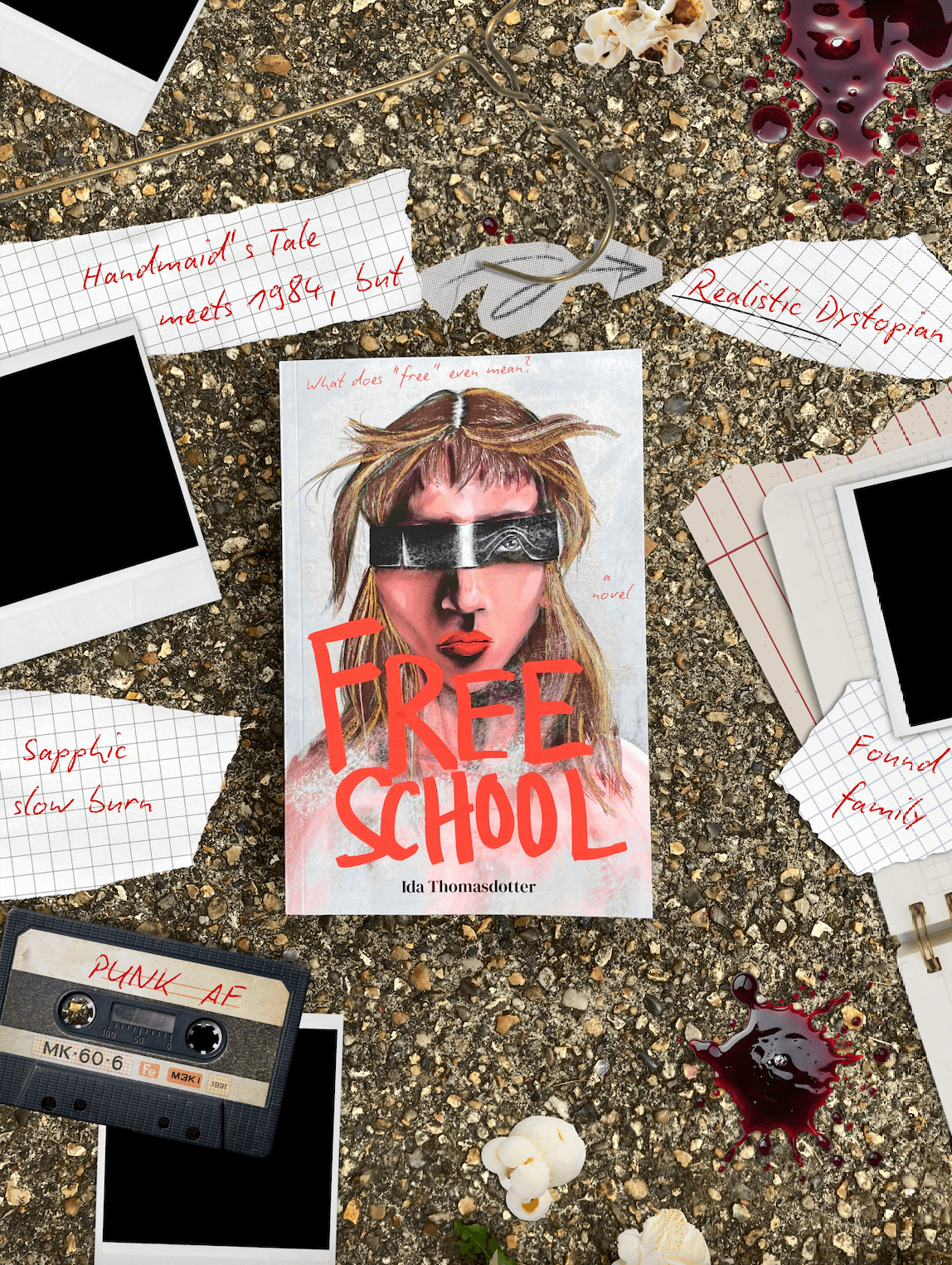
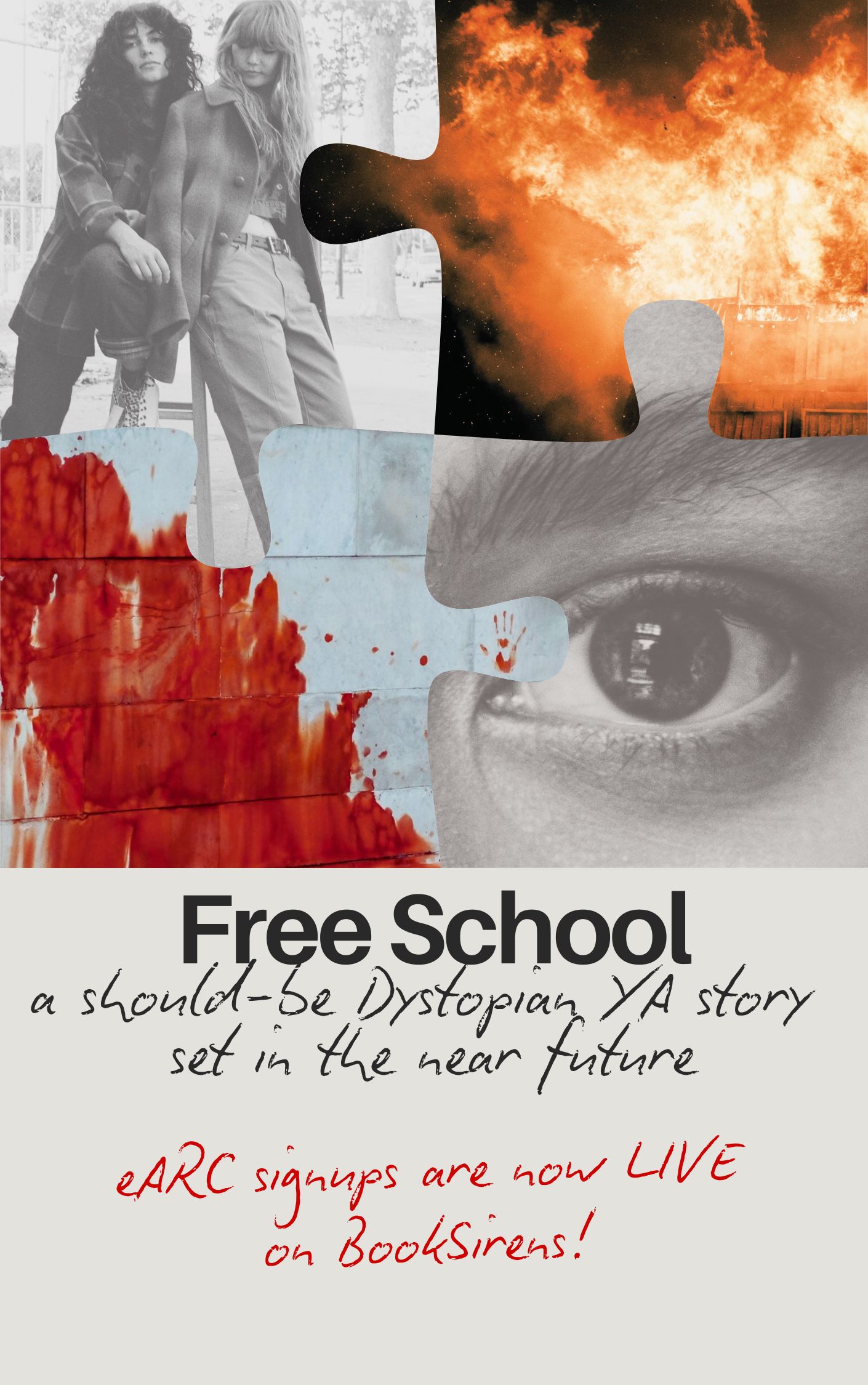
    The eARC signups for my new book, Free School, are now live on Booksirens!

    It is a (should be) Dystopian YA story set in the near future and follows 17-year-old River, who has been uprooted from her city life and forced to move to an idyllic village in the middle of Nowhere where falling in love with the mercurial Vilda should be the most exciting thing to happen . . . but the idyll is an illusion.

    The more time River spends with Vilda and her misfit friends, the more she begins to see the world around her with new eyes. So when tragedy strikes and school becomes a divisive battle ground, River is the first to take a stand for what is right!

    It’s the first book in a trilogy, which follows River and her friends as they stand up to increasing levels of corruption in the pursuit of freedom – whatever that means . . .

  • Not reading ‘Mrs Death misses death’

    I’m currently struggling through Salena Godden’s Mrs Death misses death, which I am supposed to write a comparative essay on (comparing it to Ali Smith’s Hotel World) due in a week and I’m still only halfway through the book – which is good, by the way; the reason I am struggling to read it is not a reflection on its quality or even evidence of a mismatch between it and my tastes, quite the opposite, it is very much in line with my tastes – I had expected this book to be a dark comedic fictional biography of Death, and a existential exploration of mortality, with the concept of life and death as an element through which to contextualise humanity, but, although there is some of that through the character of Mrs Death and her musings, the majority of the book is focused on the narrator’s first person accounts, either in prose or poetry, of their suicidal ideation… Now, the last thing you need to be reading when you are yourself a bipolar writer with consistently recurring battles with suicidal ideation, currently fending off the tailend of seasonal depression, is a first person narrative about a bipolar writer with suicidal ideation fending off the tailend of seasonal depression… because you will start to question your own sanity. In fact, you’d be mad not to.

    Zooming out from this book, and my current predicament, for a moment. This is a real problem. Because suicidal ideation, suicidal thoughts and suicide are a serious problem. Whether you are actively suicidal, or a person struggling with suicidal ideation, or a person close to someone struggling with suicidal thoughts or, worse, a person who has lost someone to suicide, it is something that is as lonely as it is difficult to deal with. You need to talk to someone about it, but it is impossible to talk about. You need to try and understand it, to make sense of it, to name it so you can confront and fight it. But here is the rub… consuming media depicting themes of suicidal ideation, even when it’s not glamorised or romanticised, is known to exacerbate issues of suicidal ideation amongst those who struggle with it. Data shows that after a TV show with high viewing numbers has depicted scenes of this nature or generally deals with the theme of suicide (e.g. the Netflix show 13 reasons why) there is a recorded spike in both suicide hotline phone calls and actual attempts. But avoiding the topic altogether is also not the answer, because that adds to the social sigma and then this portion of the population who are struggling with thoughts of suicide are left to suffer in silence. I don’t know what the answer is, but I suppose responsible storytelling is the main thing. For example, Bradley Cooper’s film A star is born completely romanticises the main character’s suicide, which is completely irresponsible in my opinion, whereas the novel The Hours and its screen adaptation manages to toe the line in how it depicts the suicidal ideation and actual suicides of its respective central characters, even the suicide of Virginia Woolf herself, which is a feat, considering she made poetry out of her own suicide, lining her skirt with stones and walking into the rushing river.

    If I compare The Hours and Mrs Death misses death, it’s hard to put my finger on the difference – maybe it is as simple as one being written in close third person and the other in first? – but one allows me to reflect on the subject of suicide, and of life and death, and come out the other side with a stronger will to live, and the other one… doesn’t.

    However, my tutor assures me that the narrator ‘pulls through’ in the end, so I expect that is the way the story is heading. It is just taking its sweet time to get there, wallowing in the symptoms of manic depression and anxiety on the way, interspersed with Mrs Death’s accounts of various gruesome and violent deaths, including that of a child who was sexually assaulted, tortured and murdered by Ian Brady and Myra Hindley, so based on real events, which, after ages of Epstein files flooding my social media channels (until I logged off all of social media) has not been the most comforting of reads.

    And the problem with my brain is, it won’t turn off. So now I’m haunted by images of children being tortured, imaginary children or my own, on top of questioning my own sanity. So all in all, I have no idea how I’m going to get this essay done in time…

  • Thinking about folklore & traditions in the lead-up to Yule!

    Thinking about folklore & traditions in the lead-up to Yule!

    Following on from my previous blog post about reading Ali Smith for my university course, this week I’m onto reading Potiki by Māori author Patricia Grace, which incorporates a lot of the the indigenous storytelling traditions of the Māori. I’m loving it so far, and I love how it portrays this ‘different’ culture and its traditions unapologetically, peppering the text with Māori words without providing an English translation or even a glossary. In fact, I’ve just read about this in the textbook. Apparently, when asked about this by an interviewer once, the author replied, ‘I didn’t feel it should be necessary. I just felt that Māori people have never had glossaries given to them when things have been written in other languages that they’ve been led to read.’ And I just love that!

    Also, a major theme in the book is the relationship between the Māori people (represented by the cast of characters that the book is about) and the land, and I’m finding a lot of similarities between their folklore and that of my own nordic one.

    A lot of the inspiration for the fictitious people in Pack Animals and their traditions are rooted in Swedish/Nordic folklore and pagan traditions (nowadays intermingled with Christian influences. For example, the light celebration festival of the 13th of December, which was historically the start of the jul/yule festival culminating in a big feast on the winter solstice, is still celebrated in Sweden, only now it’s incorporated the Christian imagery of angels and a Saint – Santa Lucia – dedicated to the day, who represents the bearer of the light/hope. In Pack Animals, the fictitious demigods called díser have a light festival on December 13th, which more closely resemble the pagan festivities before Christianity came to the nordic region.)

    A lot of nordic folklore and old fables centre around the relationship between people and nature, and the more I read about folklore and mythologies from other parts of the world, the more I realise how that connection with nature was fundamental to all cultures originally, and how modern religion and capitalism with its industrialisation and globalisation has severed that bond between us and the natural world. I think that the disconnect between us humans and the rest of the world is the most destructive thing to have happened to our species, and probably the planet at large.

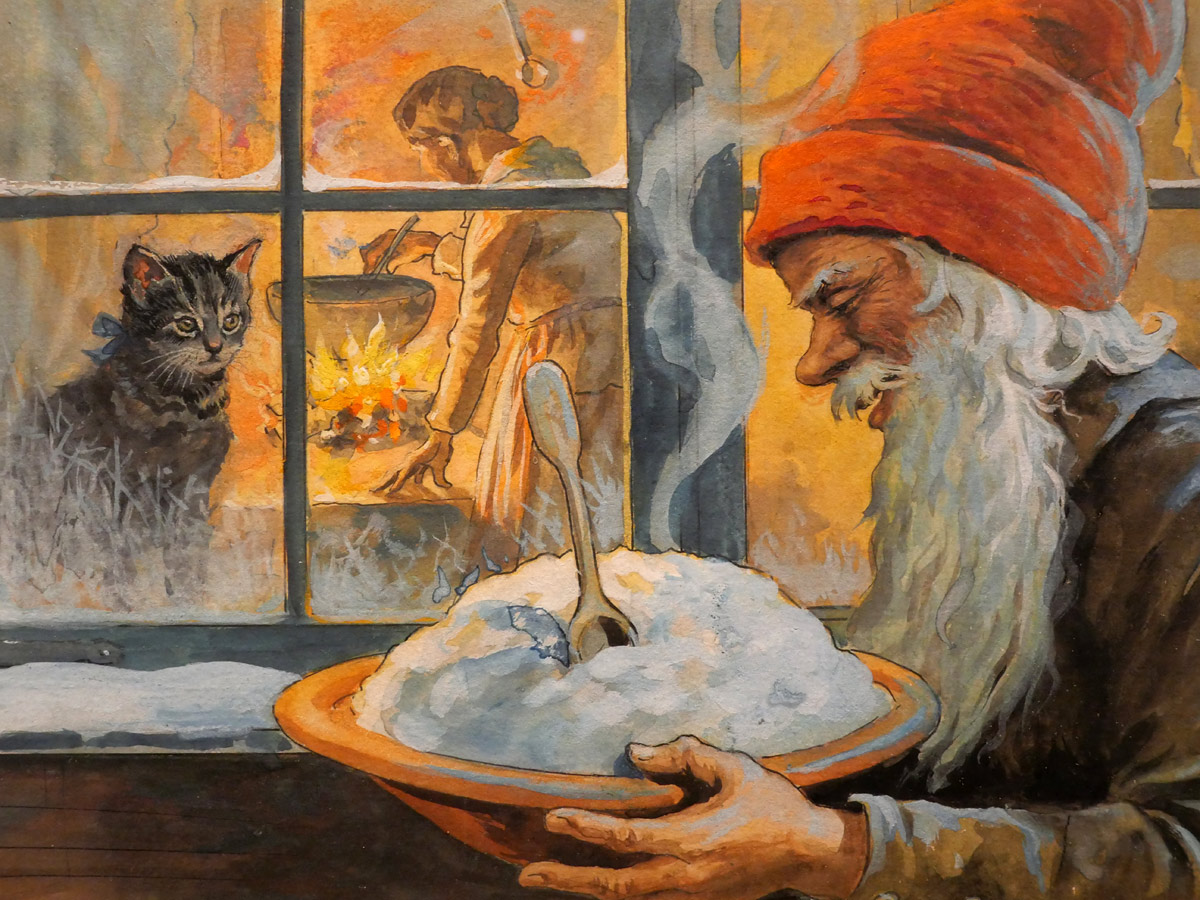
    One of the ‘silly’ yule traditions from my childhood was to put out a bowl of ‘yule porridge’ (which is essentially rice pudding seasoned with sugar, cinnamon and with a melting ‘butter eye’) for tomten. Now, in modern times there has been some confusion around who this Tomte is, because along with modern day American influences, the word tomte has also become the Swedish word for Santa, so nowadays children understandably believe they are leaving out a bowl of porridge for Santa, like children in the US leave out milk and cookies. However, this is not the case. The tradition of leaving out a bowl of porridge for tomten predates the Christian-Capitalist symbol of Santa Claus, and the creature we call a tomte is closer to what you might call an elf or a gnome (first depicted with the traditional red hat by illustrator Jenny Nyström, as seen in the cover picture of this blog post). Historically it was believed that lots of them lived in the woods, but that each household or farm had one designated tomte, essentially a house gnome invisible to most humans, especially adults, who looked after the animals throughout the year – and at yule, you offered the tomte who looked after your household a bowl of porridge to show your gratitude!

    And this is why I’m carrying on this tradition with my own two toddlers, because what better way to teach your children about the importance of taking care of nature, animals and the environment, and of showing empathy and gratitude, than through a playful but important holiday tradition during their formative years?

    Because think about it, which delivers a more meaningful message: bribing the corpulent symbol of capitalist consumerism so he’ll bring you lots of stuff, or giving thanks to a benevolent being who takes care of you, you animals and your environment throughout the year?

  • Reading Ali Smith

    Reading Ali Smith

    I am currently reading Ali Smith’s Hotel World for my English Literature degree. I love Ali Smith. She is one of my all-time favourite authors. I literally have one of her author portraits in a vision board-style collage as a wallpaper on my laptop. I think her Seasonal series is a work of pure genius, with Winter being my own personal favourite, which has consistently been in my top five books of all time ever since I read it. I don’t write literary fiction (at least not at the moment), but I aspire to be more like Ali Smith in my approach to and execution of storytelling, how she is so incredibly intelligent and knowledgeable, peppering her work with subtle references from all over the literary and pop culture landscape whilst also commanding incredible control of language and form, and she executes it all in a playful and multilayered way so it never once comes across as pretentious (at least in my opinion), only ever witty and entertaining.

    This is my first time reading Hotel World, and my first time analysing any of Ali Smith’s writing through a literature study lens and discussing it with other English Literature students, and I’m loving every moment of it.

    Her experimentation with narrative voice is particularly interesting. In Hotel World, for example, there is first person narration, close third person and omniscient third person, all mixed together in different sections following different characters who are all tied to this particular place and time, the Global Hotel and, intentionally, it is not always the character who is the focus of a particular section that tells their own story, and it got me thinking about the power of control of narrative in general, in media, in the public space, in the private space in all of our own lives; who tells your story?

  • Winter blues & Black Friday deals

    Winter blues & Black Friday deals

    So finally the time has come! The paperback version of Pack Animals will be out in only three days. To celebrate this, and help get the word out, I am doing a Free Book Promotion for the ebook version over on Amazon this weekend. That means that, for three days only – 29th November to 1st December – you can download the ebook for free!

    I’m guessing, if you are reading this, you already have a copy of it, or you’ve read it on KU for free. But if not, or if you know someone else who is into YA low fantasy, nordic folklore, found family and slow burn romance, you all can now grab a copy of it for free this weekend. If you do, and if you read it, please consider leaving a review, because it really does help the book find more readers (and it makes my day! Even if it’s not all positive, just the knowledge that my book is out there in the wild, being read by people, makes me happy and keeps me motivated to keep writing on that sequel…!)

    And that is something that’s been missing lately, I’m not going to lie… I don’t know if it’s the seasonal depression, or energy-sapping reality of marketing, or the several literary agency rejections I’ve received this past week, or the bumpy fertility ride I’m currently on, but I am really struggling to get words down on paper at the moment. I get why some “authors” give up and use genAI to get their books out of their heads, but that just makes me even more frustrated with the genAI discourse going on online. Because I’ll be damned if I ever get so lazy as to sell my soul and stick my story ideas into an unethical computer program so it can churn out some soulless, unoriginal shit prose and call it my story. I rather hibernate and wait for my creative battery recharge!

    I just hope my book finds its way to some more awesome freaks and misfits in the new year!

  • YA folklore fantasy book projects 🌿🦊

    YA folklore fantasy book projects 🌿🦊

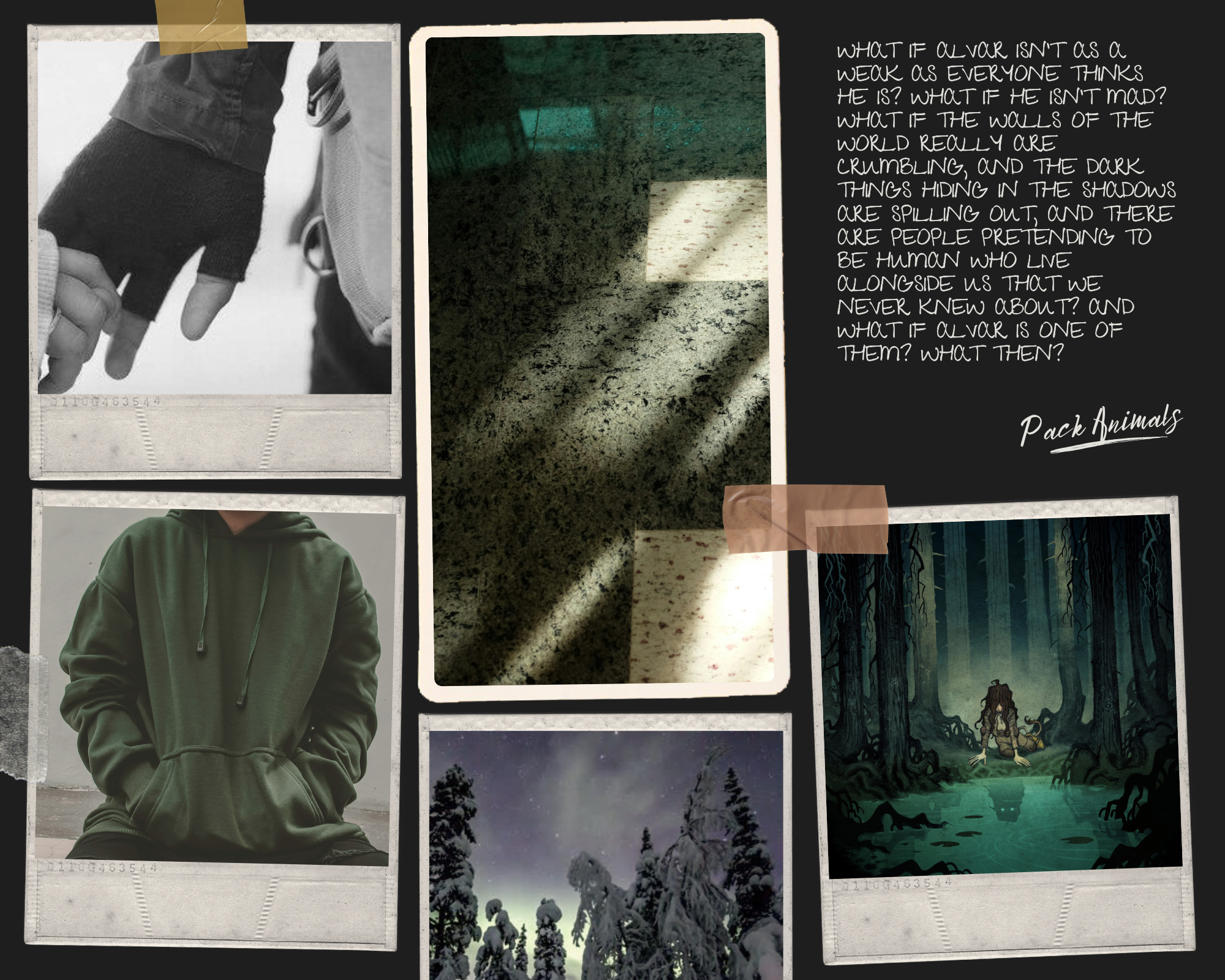
    What if I told you that there are so-called ‘shadow people’ secretly living among us, some that we can’t see unless they are in their animal form and some that we can, that hide in plain sight, pretending to be human? Imagine being a seventeen-year-old boy desperately trying to survive the dog eat dog world that is school and discovering that you are one of these shadow people, you just never knew it.

    Alvar has been in a suspended fight-or-flight response for as long as he can remember, stuck in the foster care system and moved from family to family, from school to school, never at home and always a target of bullies no matter how much he tries to blend in. He has finally learned to mask everything about himself that makes him other and begun to turn his life around, when his whole world comes crashing down. Not only does he develop forbidden feelings for his new friend, the weird loner kid in the year above, his mind mysteriously caves in, threatening to undo all his hard work convincing everyone at school that he’s cool and his foster parents that it would be a good idea to adopt him… Alvar’s worst fear is going mad and that that will send him back to square one: alone, discarded, bullied. But the truth turns out to be so much worse. He is not mad at all; He is not even human.

    Pack Animals is a modern changeling story steeped in Nordic folklore and the first book in a YA folklore fantasy duology, which follows Alvar as he delves deeper and deeper into the Shadow realm – and beyond – in his desperate search for answers. 

    I have been working on this book since the start of my pregnancy, so over two years now, and have just sent it off to my editor. I am plotting the sequel, The Shadowland, as we speak.

  • Regrouping in Sweden

    Regrouping in Sweden

    I had the idea for my nordic folklore fantasy book at the very end of 2022 and started writing on it around the same time I started IVF in early 2023. My twin pregnancy was tough to say the least, so I did not get a lot of writing done during those arduous, nauseous months, but I made up for the lost time as soon as the boys were born, writing in the early hours of the morning with the babies nestled in my lap as the sun rose outside the window. I finished typing the final scene of the first draft literally with one hand, as the other was busy holding a five month old baby to my shoulder and I spent the next four or five months editing the manuscript on benches in local parks and on my living room floor while the babies were napping. Then I started querying agents.

    That was almost a year ago now, and after a few rejections and lots of ghostings, I’ve been feeling disheartened to say the least. I recently took the boys to Sweden for three weeks – their first time visiting the homeland! – and I also took the time to regroup, and think about what I wanted to do, and I have decided to remove my book Pack Animals from the querying trenches… and to self-publish it!

    Honestly, between the neurospicy representation and subversive take on the hero’s journey, not to mention an unflinching portrayal of mental illness, it was never going to get past the gatekeepers anyway!

  • Dystopia is already here.

    A few weeks ago, I finished the first draft of a YA novel which is the first book in a political drama thriller trilogy set in the near future and, although it’s an urban/low fantasy, the plot has some dystopian elements, such as stricter abortion legislation and spying period trackers, and later in the trilogy a very dark side plot looking at what happens when a so-called progressive state in late stage capitalism takes assisted dying legislation to its nth degree and starts getting rid of citizens who are not profitable. All of this was supposed to be fully dystopian fantasy, but as I was finishing up the first draft of the first book, we started seeing headlines about British police granted search warrants for the houses of women who had suffered miscarriages and now the Assisted Dying Bill has passed the House of Commons and lies in the hands of the Lords. Meanwhile, there is a genocide is Gaza and a stealth World War Three is already underway. These are definitely bleak times, and sometimes I wonder if creatives should even explore dark, dystopian themes at all… or are we just giving them ideas? There’s a Chicken and Egg problem for you: in the feedback loop between societal culture and artistic culture, where does the circle start?

  • Writing about some of the times my body was not my own.

    Nine and a half months ago I gave birth to my twins and I’m only now beginning to reflect on just how much I had to fight for my right to make my own decisions throughout the whole process. Energy I didn’t really have during an arduous and complicated pregnancy was spent on fighting for bodily autonomy and that fight continued all the way into labour.

    I’ve now come to the point where I have to write about this, so I am slowly but steadily dipping my toes into life writing for the first time and I’ve just put together a book proposal for what is essentially a memoir told in a handful of episodes from my life when my body was not my own. Because, as I’ve been processing this experience, it’s made me think of other times in my life when this has been the case, when I have been objectified, in different ways and for different reasons, but always because of inhabiting a female body.

    Growing up as female in a patriarchal society, this has unfortunately been a recurring theme. I know I’m not alone in this, far from it, which is why it feels important to me to write about these experiences and to (hopefully) share that writing, so that I may be part of an ongoing conversation, which I believe to be vital. A conversation about resistance. 

  • five months & a lifetime

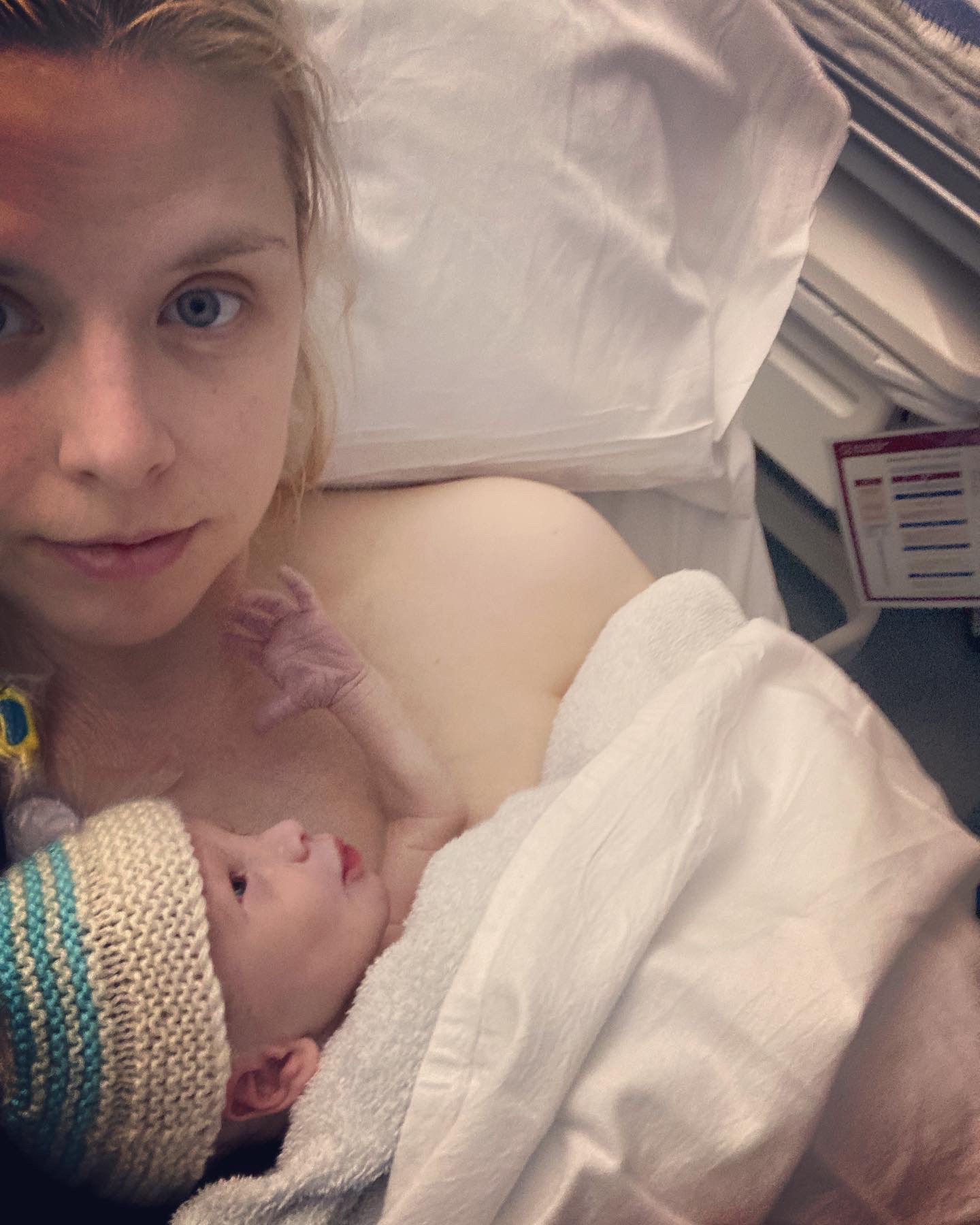
    After a horrendous pregnancy, a long and arduous labour, overwhelming birth and even more overwhelming recovery in the immediate postpartum, followed by five weeks of slow physical recovery and postpartum depression… spring is here, as are my two identical twin boys, now five months old, with their abundance of personality and cuteness, and I just wanted to say: I didn’t think it was physically possible for one body to contain as much love as I feel for these two tiny humans. That was all.

  • they call it “baby blues”

    they call it “baby blues”

    They call it “baby blues” but truthfully there is nothing about these babies that feels blue to me. The way it feels to hold them close to me, the funny expressions they make and the way their tiny fingers wrap around my giant index finger, and their very existence, is nothing but pure pink light. The fact that they’re here, that they’re real and alive and that I have the indescribable privilege to be able to call them mine, fills me with more joy than I ever would have thought possible for one person to contain. Nothing of that is blue.

    It’s just me. It’s not the thought of having them in my life, but the thought of them having me. That’s where the streaks of blue cut in. The thought of these tiny, vulnerable clean slates of persons having to set out on their life’s journeys with me for a mother, the thought of all the other hypothetical mothers who would probably do a much better job and the fear parading as certainty that I’ll mess this up, that I won’t be strong enough to continuously and permanently be my best self and, by extension, the best mum for them, the mum they need and deserve, that’s where it gets blue. And it gets really fucking blue. We’re not talking sky blue here. We’re not even talking navy. It’s midnight blue going on black.

  • (placeholder)

    (placeholder)

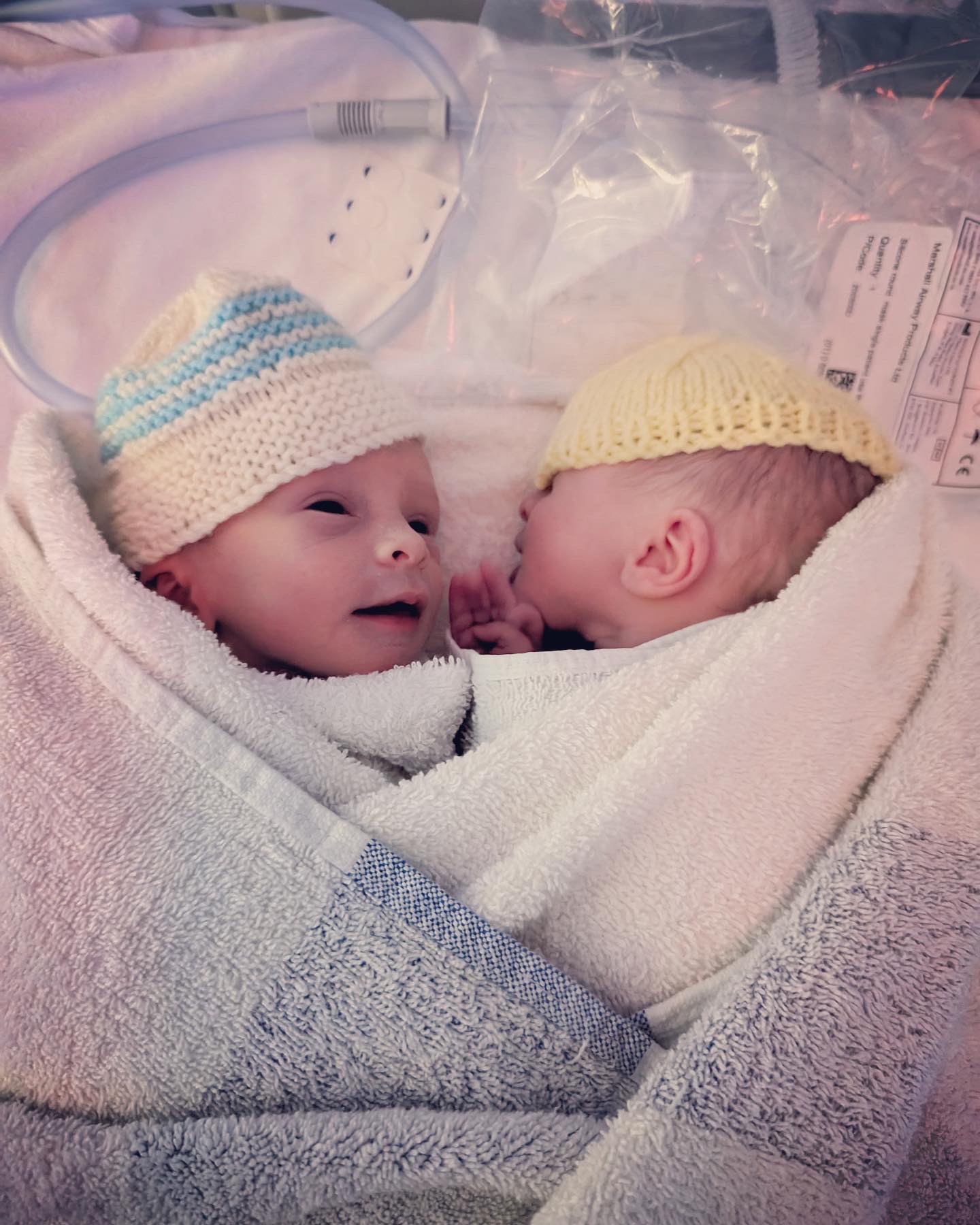
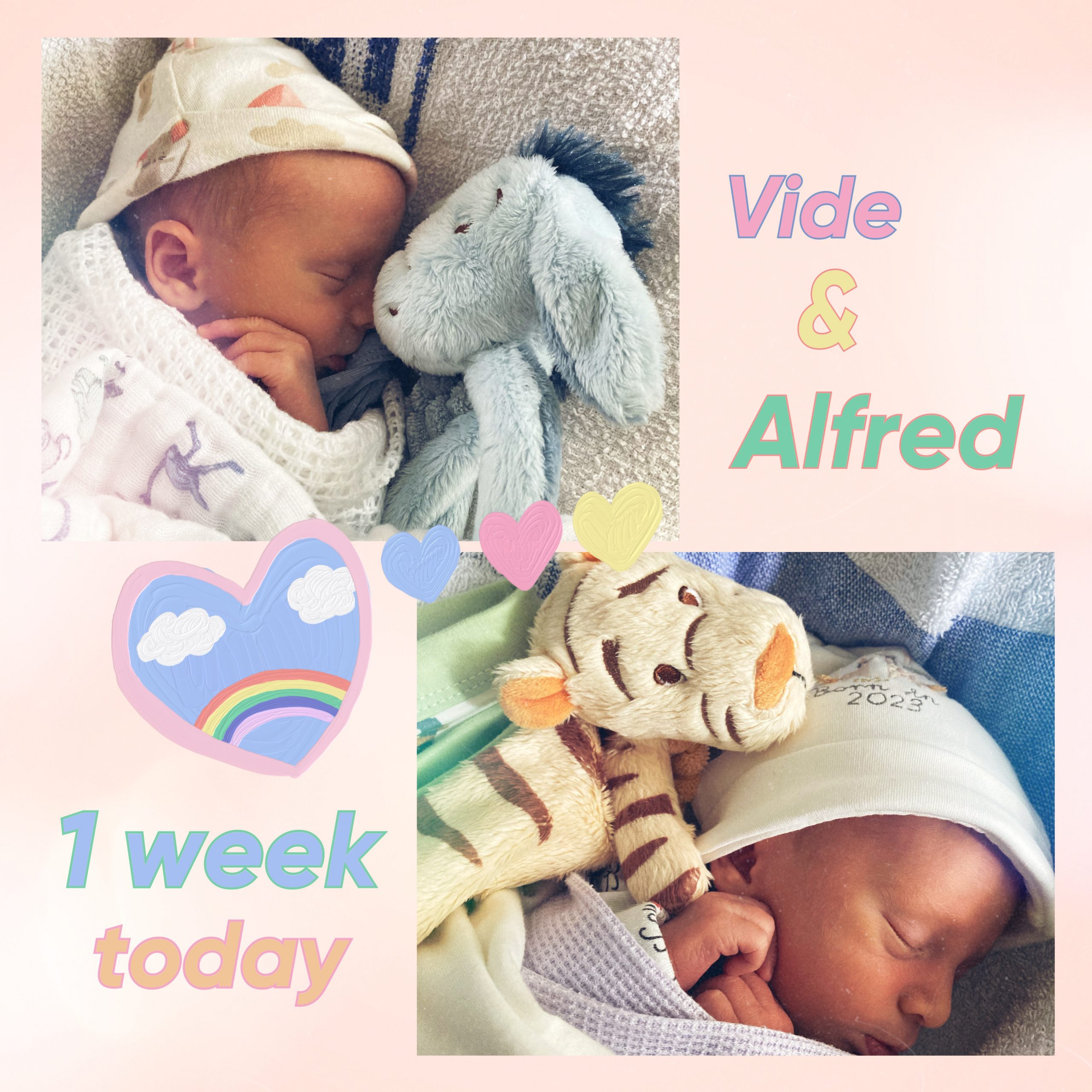
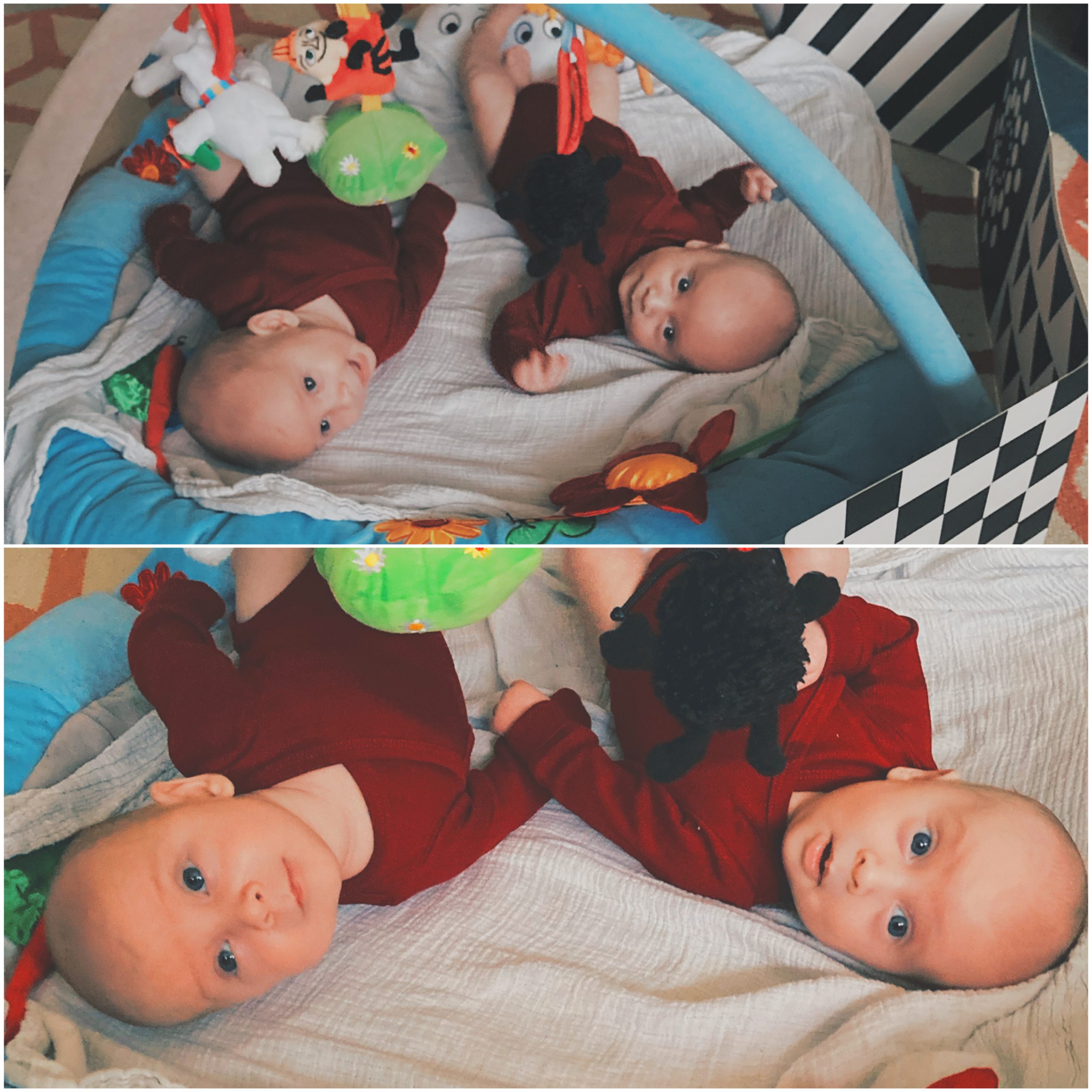
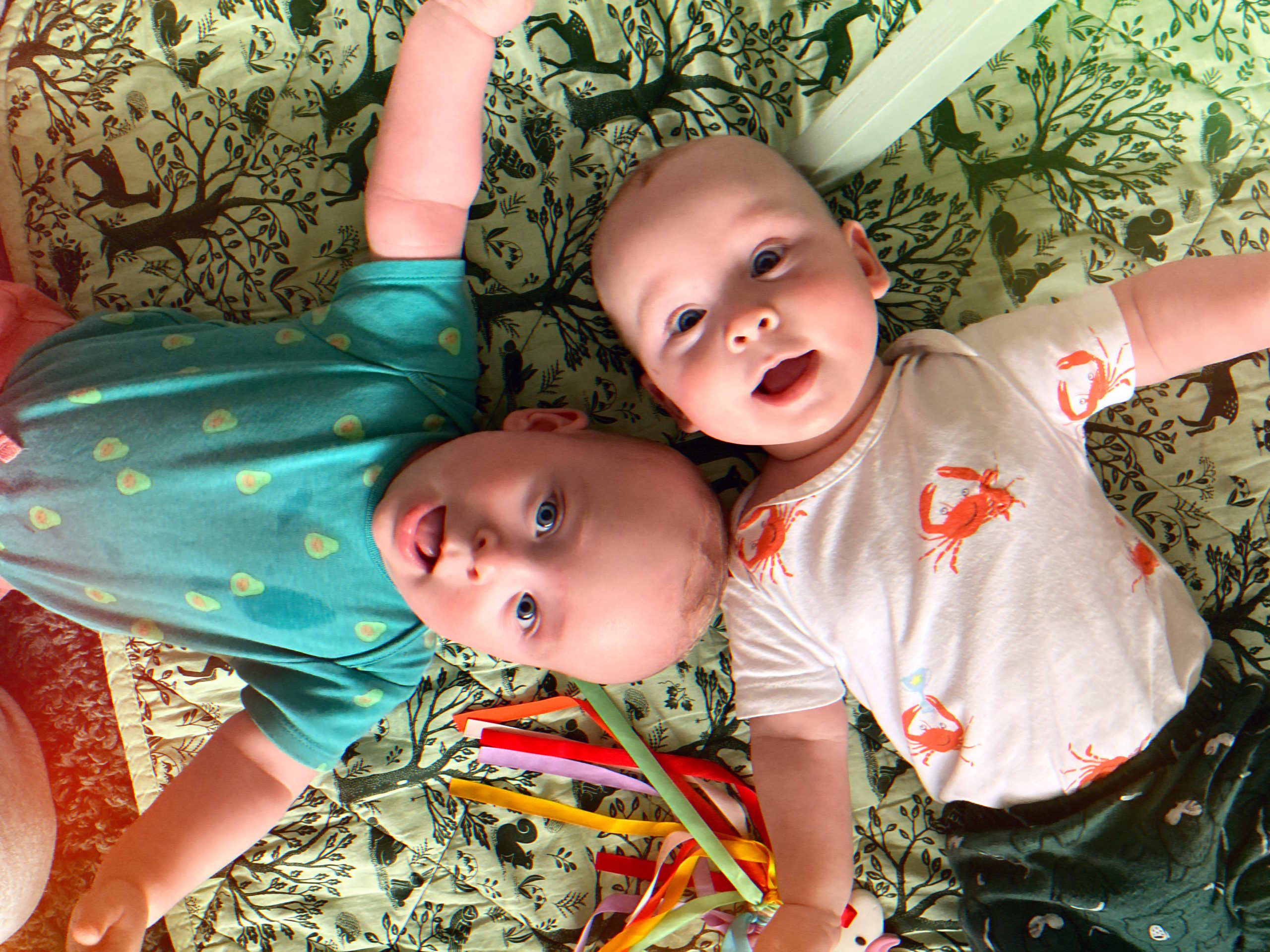
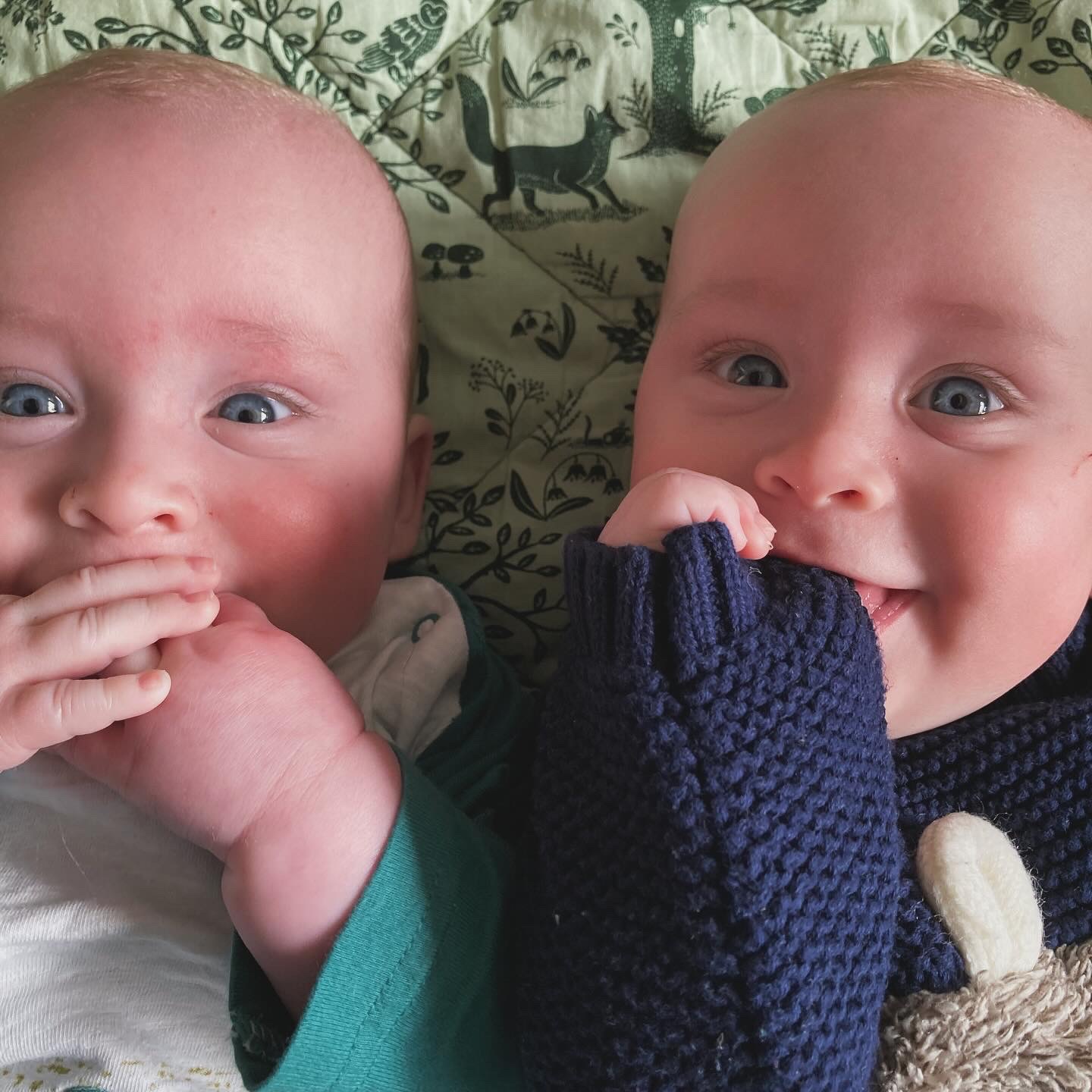
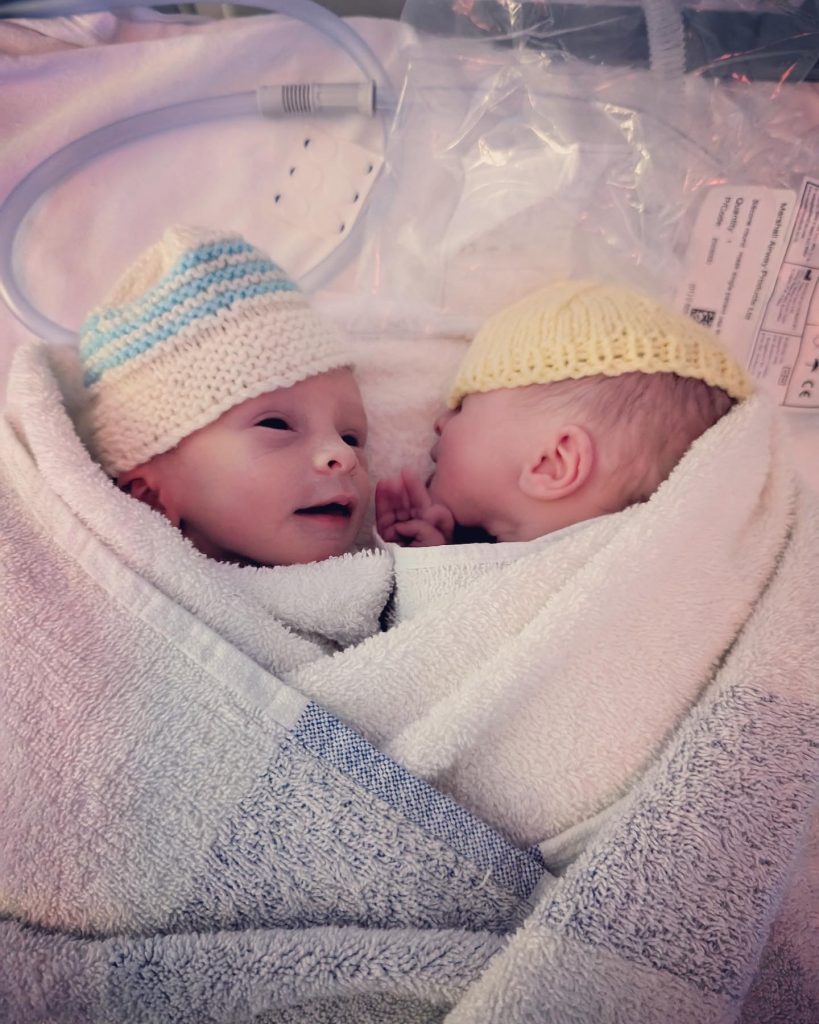
    ✨Alfred (b. 2023-10-29, 00:01)✨

    ✨Vide (b. 2023-10-29, 00:17)✨

  • navigating pregnancy

    navigating pregnancy

    What I’ve noticed in this pregnancy, as all women who have been pregnant before me surely must have noticed too, is that there is no limit to the well-meaning comments and opinions that are thrust upon you and that, with very few exceptions, they all come from the very narrow and subjective perspective of the person giving them, especially if the person is neurotypical. It could be because I’m feeling especially vulnerable and anxious during this time, but I’ve never noticed this as strongly before. 

    I always try to put myself in the other person’s shoes when I listen to others, so when they’re speaking, I form an idea of their version of reality and for the duration of the conversation that is the reality that we exist in… this is how I can have respectful and in-depth conversations with people of different faiths and political beliefs, listen attentively to someone telling me about anything from astrology to sports science, or whatever it is. I don’t lie and tell someone I agree with them or see things the same way as them, unless I actually do, but I accept the rules of their belief system and personal experience when they tell me something. To me this is partly empathy and partly being respectful and polite in a social situation. 

    So, if someone was to tell me about their experience of pregnancy or plans for birth, it would never occur to me to go “oh no, that’s a horrible idea, you don’t want to do that! Trust me, this is what you want to do…” and then proceed to give advice based on my own personal experience — because we’re not the same people, we don’t have the same background, life situation or preferences, and we definitely don’t have the same pregnancies, so that advice would literally be irrelevant. So whenever someone does that to me, it really throws me off. 

    This is the thing. Even disregarding the fact that I’m pregnant with MCDA twins, which in itself is considered high risk, I am also living with bipolar disorder. I’ve been in remission for three almost four years, but there is no cure for bipolar, you always have to be aware of the risk factors and make life choices accordingly. For example, I can’t afford to stay out all night, then impulsively take a trip somewhere to catch the sunrise before I go to work. There was a time when I could, and would, do stuff like that. And it made me very unwell. The truth is I need to be boring and have a consistent bedtime and it doesn’t matter if it’s the weekend or I’m on holiday. I can’t afford to mess up my sleep. And that is just one of many examples. 

    I have planned for this pregnancy for years, I’ve read everything there is to read and gone to seminars and workshops, I walk around with a risk assessment in my head that I am constantly aware of, because pregnancy and childbirth, and the postpartum months, are three of the biggest risk factors for bipolar women. This is why I don’t have the luxury of scoffing at a holistic approach to pregnancy and birth. It’s not that I’m a hippie. I just know my risk factors and I can’t afford to ignore them. 

    What I hadn’t accounted for was having to fight my consultants on my preferences, but I shouldn’t really be surprised. I’ve met a lot of medical and mental health professionals in my days and in my experience they don’t tend look favourably on patients with opinions about their own treatment, especially when those opinions are built on heavy research rather than irrational feelings. It’s made for a really lonely pregnancy, if I’m honest with you. I’ve been lucky to have been assigned a brilliant and empathetic midwife who’s heard me every step of the way and I’ve been similarly lucky to have a very supportive partner by my side, but even he was struggling to see my side of things for a while due to his own anxiety about the upcoming birth and worrying about my wellbeing. Statistics are easy to quote, but it’s a lot harder to explain the intricacies of your own inner workings in terms of what makes you feel safe or not, what stresses you out and what doesn’t, what is triggering and what is helpful… but after some silent reflection, he eventually came to the conclusion that he trusts me to know myself and to know what’s the best option for me in any given circumstance, and he told me that is completely on my side.

    And here we are. It’s Wednesday, I’m 35+1 weeks and hopefully I’ll go into labour by the weekend. If I don’t, I’ll have to head to hospital for an induction on Monday (and statistics say that if that happens, then plans will have to change anyway and I’ll end up having an emergency intervention.)

  • building worlds & growing humans

    building worlds & growing humans

    As chaotic as 2022 was, 2023 has so far been just as intense, if not more so, only in a very different way. Having left my job under very stressful circumstances and essentially put my whole career in film and transmedia on indefinite hiatus, I enrolled in Jericho Writers Ultimate Novel Writing Course and had the privilege to be mentored by Marcus Sedgewick before he suddenly passed away halfway through the year. Even though I’d only known him for five months and never met him in person, only ever via zoom, Marcus left a gaping hole behind and it shook me to my core. Even with the support and empathy of my new mentor, Anna Vaught, it took me weeks to even open my Scrivener project. But once I did resume writing, it was the memory of Marcus’ encouragement that finally gave me the push I needed and once I started, I couldn’t stop. I finished my book and started another in a feverish flow of inspiration.

    Amidst this emotional turmoil, my partner and I started IVF, which didn’t exactly help stabilise things. But we were extremely lucky. Four embryos survived the process and the one that was transferred into my womb managed to stick. Having gone through an early miscarriage a few years ago, I was so anxious about seeing a heartbeat on that first ultrasound scan and we did — not only that, but we saw two! — Briefly, I tried to tell myself that I was pregnant with a Timelord, but I didn’t really believe myself. Neither my partner nor I had been aware that an embryo could decide to split during the implantation process, we’d always assumed that when people had twins after IVF it was because they’d transferred more than one embryo to increase their chances and we’d only transferred one. We were both in a state of shock when we left the clinic that day and it didn’t really lift until several weeks later. We were expecting twins. Identical twins.

    In the months that followed, I was more or less out of action due to debilitating pregnancy symptoms. As if the fatigue and B12 anaemia wasn’t bad enough, I also had such severe nausea I couldn’t keep anything down and had to get medication prescribed — something that people chirpily celebrated, ironically enough, because it meant the pregnancy was progressing and the babies were doing okay!

    As I’m writing this, it’s midway through October, I’ve just attended the Jericho Writers End of Course London Event and am due to give birth to my two very small premie babies any day and my life will never be the same again. Such a strange thing to be aware of, isn’t it?

    I enrolled in the Ultimate Novel Writing Course with the intention of writing a YA novel and in the end, I wrote two. Both of which I am now revising with the aim of querying agents in the spring, when I’ll also start studying towards a degree in English Literature whilst developing my next book projects and taking care of two babies. Amazing, how much your world can change in a year!

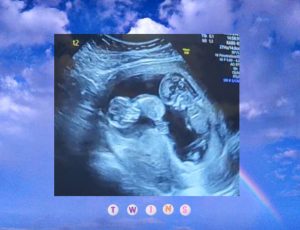
    Early ultrasound scan picture of twin babies.
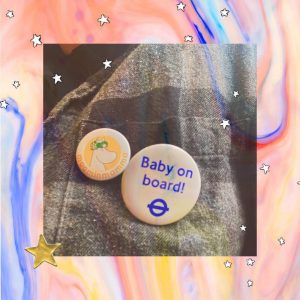
    close up photo of two pins: one of Moominmamma and one Til pin saying "Baby on board"
  • Fleeting thoughts about keepsakes

    Fleeting thoughts about keepsakes

    Planning for motherhood, I find myself nesting. But not only that, I’m also pre-emptively sentimental and nostalgic over things that have yet to happen. Browsing cute fabric patterns to make onesies out of, I don’t just picture those fleeting early days when my babies will be wearing them. I picture the day when they’ve grown out of them and I’ll be tearing the onesies into pieces, so I can make a patchwork quilt out of the scraps. I’m planning my future children’s keepsakes. 

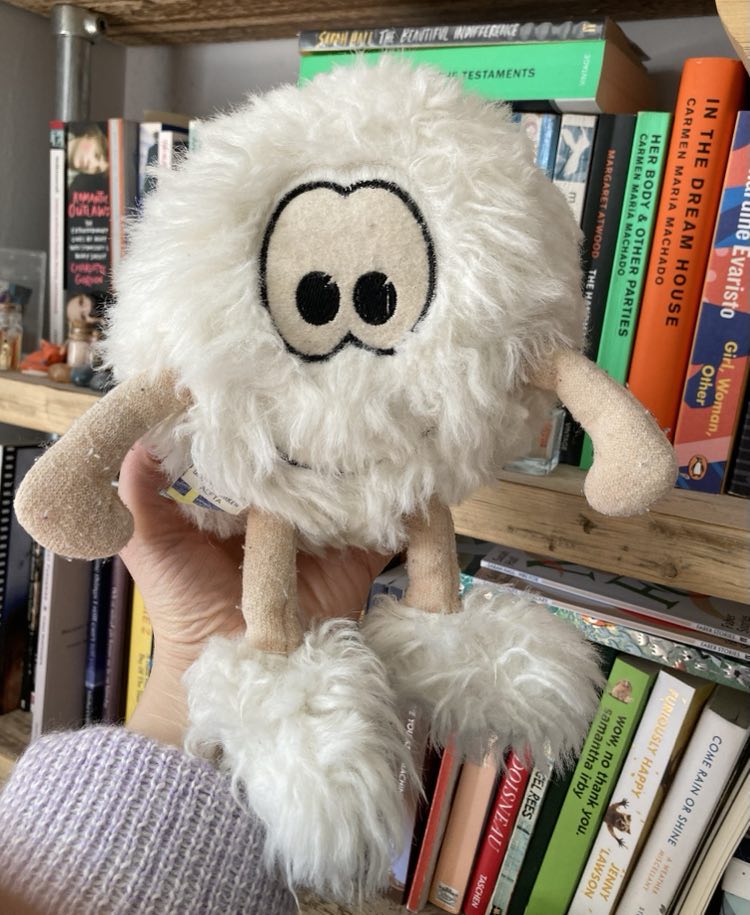
    One of the keepsakes from my own childhood is a plushie, that only a Swedish person born before 1990 will know what it is. Essentially a fluffy white ball with big eyes and wide smile, two skinny arms and two skinny legs with fluffy white feet, Gnutten is a made up woodland creature from a Swedish comic book series by Lars Mortimer, published in the 80s and in 1990 my family took me to the Gnutt factory, where Gnutt plushies were made — and I got a Gnutt of my own! 

    Gnutten was one of my favourite plushies, but he wasn’t the favourite that accompanied me everywhere (that was a Montessori doll named Maja), and he clearly wasn’t the very first (that was a white and grey cat, also called Maja, but named after a character from the Swedish children’s book series “Pelle Svanslös”), but Gnutten is the one that’s stayed with me for three decades and has got the pride of place on the back of my sofa, now that I’m 37 and expecting two babies of my own. 

    After Maja the cat got chewed up by the family beagle and Maja the doll got tucked away into one of the boxes of things I’ve got stored in my parents basement, Gnutten has stuck with me. He didn’t start out the most special, but became it over time. I’m not sure why, if there even is a reason or if it just happened. Maybe our keepsakes aren’t always the things we consciously choose to keep, but the things that simply make it through. 

  • Attention Deficit Hyper-act

    Attention Deficit Hyper-act

    🌧️ November 🌧️ is normally the worst month for me in terms of bipolar depression and it’s always a battle getting through it with their least amount of wobbles possible. But this particular November was even trickier to navigate, due to the aggravating external circumstances of my writing mentor Marcus Sedgwick suddenly and unexpectedly passing away.

    I set out to start and (more importantly) finish the first draft of a novel in July and, since finishing longform projects is my achilles’ heel in life, I decided to also commit to taking Jericho Writers Ultimate Novel Writing Course at the same time, thinking the structure and motivation of the course would help me stay on target. The mentoring and feedback, I thought, would just be an added bonus and at the start it was. My writing process started with the usual burst of energy and excitement that all new projects bring me, which then gradually deflated and finally brought me to a crashing halt at the first major milestone in the story. But Marcus’ gentle guidance and general excitement about discussing my story or characters got me excited about the project again and I got another burst of inspiration and could write another few thousand pages. And this became the pattern. I’d churn out another few scenes, hot a milestone (or stepping stone as Marcus called it) and get stuck. Marcus would get me excited about the project again, and I was back on track.

    The writer’s block (or rather motivation-to-write block) that I hit at the end of October was, as it was always doomed to be, made so much worse by the weather (external as well as internal) and the indisputable Fact of Depression that had been creeping up on me since August, but by this point was undeniable, and I wasn’t able to write a single thing for the first week of November, despite signing up for NaNoWriMo to help motivate me. So I was more desperate than ever for my monthly 1-2-1 with Marcus, because I knew talking to him would trigger some kind of excitement that would get me writing again, maybe even get me out of my depression long enough to make it to December…

    I was literally waiting for him to let me into his zoom meeting room, when the news of his passing reached me. To say that it was a shock would obviously be the understatement of the year.

    Marcus was an extremely compassionate and funny person and will probably be missed by everyone who ever met him purely for this reason, he was simply a really great guy, but he was also an incredibly inspiring and encouraging tutor and mentor. I’m not exaggerating when I say my whole tutor group at Jericho Writers, who had Marcus as our tutor and mentor, completely fell apart. None of us could write for at least two weeks after the news, none of us could even face logging onto the platform and the Jericho team had to facilitate a way for us to exchange contact details so we could set up a WhatsApp group and support each other through that period. We were all shocked at how extremely it affected us. As with any unexpected grief, it obviously triggered all sorts things. But I think it’s also a testament to what an amazing person and mentor Marcus was and how quickly you were able to connect with him, for us all to react so similarly to his passing. A few of my lovely course mates couldn’t face continuing with the course at all, unfortunately. But a few of us stayed on and got welcomed into one of the other tutor groups and I was very grateful to be included in Anna Vaughn’s group, someone I had already thought of us an unofficial mentor since connecting with her in the Writing Community on Twitter.

    In mid-November, after two wobbly weeks of not writing a single word, or doing much else either (except crying or trying not to) I slowly but steadily managed to pick up the pieces and sat down to write again. I think at this point, I’d been away from the project for so long and I also needed the escapism, because I gratefully dove into my story world and didn’t resurface until I’d reached my NaNoWriMo goal and one week into December, I finished the first draft of my novel. I could barely believe it!

    ✨ new projects ✨

    Amazingly enough, when my partner said I should celebrate finishing my project by taking time off and just enjoy the holiday season, I thought about it for exactly one second and immediately felt that the way I wanted to celebrate the achievement of finishing the project, was by starting another project. My partner laughed at me, saying my idea of taking time off work was by working, but starting new projects is my absolute favourite thing in the world and I had this idea that had been scratching at the door of the back room of my mind for months, but I’d ignored it because I’d made the commitment to only focus on my current novel while I was still writing on the first draft. But now I’d finished the first draft, so I was finally (finally!) allowed to open that door — and what came bursting out was another YA novel, it had the themes, the world, the characters and now it wanted me to sit down and plot our the storyline, and I did. It took me one day (and it was a glorious day!) and half a notebook, then I had the blueprint for my next novel and I couldn’t wait to start writing it — literally! — I plotted out the story the day after I finished my novel ‘The Lighthouse’ and only held back from starting the writing process because I had holiday-related arts and crafts to be getting on with, but ten days later I started writing the prologue and with the exception of the actual holidays, I more or less leapt out of bed every morning of December, eager to start my morning writing session and after two weeks, I already had 20k words written. (now, after another week, the first draft is 36k but I can feel the excitement beginning to wane finally.)


    Getting to the point of the post?

    The funny thing, that the facetious headline of this post alludes to, is that I was recently diagnosed with ADHD and, as anyone who’s been diagnosed with ADHD (or something else) at a later stage in life will probably attest to, it does feel like someone giving you “the final piece of the jigsaw puzzle” and it has a very crucial part of the picture on it. Suddenly, so much of your self and your life, going all the way back to childhood, make sense. For example, the ease with which I come up with ideas and almost compulsively start new projects, but very rarely finish any of them, because the excitement of new ideas keep grabbing my attention. Well, as it turns out, there is a physiological reason for this if I have ADHD. People with ADHD have an innate deficiency in dopamine, which is a neurotransmitter that (in a nutshell) is responsible for feelings of pleasure and reward and helps us regulate emotional responses and to take action in order to achieve specific goals, or rewards. Some researchers believe this is due to higher concentrations of a protein called dopamine transporters in the brain and nervous system; higher density of dopamine transporters (DTD) can apparently lead to lower levels of dopamine in the brain. What this means in practical terms is that people with brains that don’t have the dopamine level required function properly, will subconsciously do stuff that releases a dose of dopamine. For example, starting a new project!

    This morning, I denied myself my daily morning writing session because I am broke AF and need to find a job, so I sat down at my computer with a fresh cup of coffee and an abundance of determination, opened several tabs with various job boards and started looking for work… it has now been two hours and forty minutes and I have, in that time, read the opening paragraphs of countless articles about “How to…” become a script reader/development researcher/book editor/book cover designer or write a good CV or start a podcast; started this blog post; researched ADHD; looked up the latin name for a puffin; been on the phone with a doctor’s clinic to book some appointments that I was supposed to have booked last week; written some more of this blog post; remembered that I launched a mental health and creativity substack on New Year’s Eve and I have yet to write up the next few posts like I’d planned and the next one is due to be posted at the end of this week; considered writing the next substack post and decided against it; checked my instagram accounts four times; done three squats and researched vegan recipes for dinner ideas.

    So, what’s happened there, is that job boards are extremely boring and my brain will not, under any circumstances, be remotely helpful in processing the information on the page or stay focused on said page. Because my brain wanted to write on my new novel for an hour or two and has been thinking about little else since last night, trying to do anything else, especially something really boring, is basically futile. But if I had sat down at 8:00 (put a timer on my phone so I wouldn’t lose track of time) and churned out 1500 words, which is my average word count from one morning session of one-ish hour when I’m in a writing flow and hyperfocused, then had a 10 minute break to do some yoga or squats or whatever and then logged onto some job boards by 9:15, I would by now, probably, still have accomplished more in terms of putting some job applications together than I have with that extra hour.


    The irony

    It took me several years of trial and error on medication for bipolar disorder, then several more of going off the medication and many trips to Hell and back again in that period, to decide to change my lifestyle drastically and manage my bipolar life off meds. Yet here I am, actually considering trying out ADHD medication. Because that’s how frustrating it is, when you know you need to do something, whether it be go to the GP or dentist, do the dishes, open a letter, apply for a job or finish a project, and you gather all your time, energy and mental and emotional resources to do the thing and then you just can’t because I don’t even know, someone reaches inside your skull and replaces your brain with a tomato salad, I don’t know. It’s so incredibly frustrating. So yes, I either need to try medication or come up with some better ways of making money that works for my brain. If I had some capital, I would start up my own company, but as it stands, I’m back to freelancing until the company I’m currently (theoretically) creative director of is resurrected.

    I’m still working on my novels, as well, of course. But as we’ve seen in the press lately, established novelists don’t even make a living from their books so, unless you’re JK Rowling, your writing needs to be complemented with some other source of income. Also, I would never be happy just writing prose. I have a passion for film and transmedia, so I will always want to continue exploring different ways of telling stories. Just because Cypherpunk Studio hit an iceberg, doesn’t mean I’m giving up on my interactive film ideas. Whether Cypherpunk Studio sinks or not, I still have my interactive film projects. It’s just going to be trickier and take me longer than I’d originally hoped, but I will finish my projects in progress and find a way of funding the projects I have in the pipeline, too, somehow. We have spent too much time, energy and money on developing our interactive concept, and I have written some really cool stories to go with it as well, so we are not giving up so easily.


    ❤️‍🔥 the INTENTIONS that I have set for myself for 2023 ❤️‍🔥

    • Re-develop a (physically & mentally) healthy routine
    • Use my new Substack “Creative Life; Happy life” to keep motivated in maintaining work/life balance
    • Edit my novel manuscript ‘The Lighthouse’ & query agents in the autumn
    • Finish my new novel ‘Pack Animals’
     

  • I wake up like this sometimes

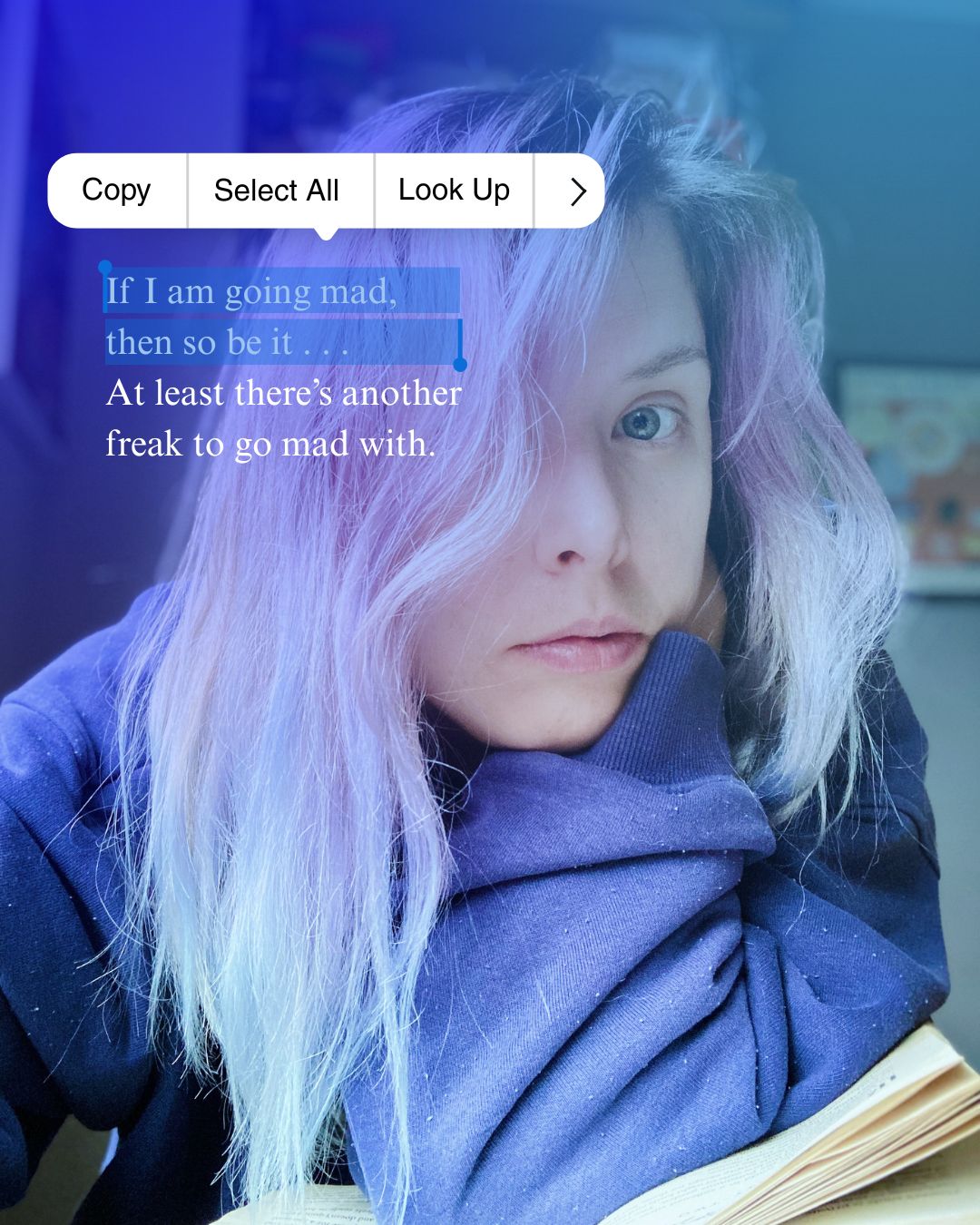
    I wake up like this sometimes

    Some mornings you wake up and everything just feels wrong. It’s not even so much the world around you; the walls and doorways of your home are the same as yesterday, the herbs and succulents growing on the window sills are the same; they need some water, you water them; there are dirty dishes on the worktop next to the sink and it makes you want to break down in tears, so you force yourself to do the dishes, even though doing dishes is the most horrible, Sisyphean task in existence, because doing the dishes is still more productive than crying about them needing to be done; your job, although a stressfully precarious Situation rather than a straight forward Job, hasn’t really changed at all since yesterday and the sky outside the windows might be a bit grey, but it’s not falling down or anything, yet it feels like it’s pressing down on you.


    It’s you. You are the wrong thing, you realise. The part of your being that is the “you” simply feels wrong in the confines of the body that houses it. Your skin is too tight. The room is too cold. It is also too hot, somehow. It’s definitely too humid and you definitely want to cry, in fact that’s the only thing you want to do at all. You clearly don’t need to, though. Because you don’t. As if the mere fact that crying just isn’t productive enough or worth the effort, your body decides not to even though it’s the only thing you can think of that you really, really want to do. Anything else is besides the point. You feel empty and full of pressure at the same time, and everything is just simply wrong.


    This is one of those mornings.